Voice AI Performance Reports: A Smarter Way to Prove Results

If you are using Voice AI inside HighLevel, one of the biggest questions is not just what your agents are doing, but how clearly you can measure the value they are creating.
That is exactly where Voice AI Performance Reports come in.
Instead of piecing together activity across calls, agents, and time periods, you can now have an automated report sent on a schedule that works for you. Weekly, bi-weekly, or monthly. Simple. Consistent. Useful.
And more importantly, it gives you a clearer picture of what is happening across all of your Voice AI agents so you can understand performance, show outcomes, and communicate value to clients in a way that actually lands.
Why performance reporting matters for Voice AI
Voice AI is exciting because it can save time, handle conversations at scale, and support teams without adding more manual work. But excitement alone is not enough. If you are running an agency, managing SaaS operations, or helping businesses implement HighLevel automations, you need a way to answer practical questions like:
- How many calls are being handled?
- Are those calls going well?
- How much time is being saved?
- What is the success rate?
- Are agents improving outcomes for the business?
Without reporting, Voice AI can feel like a black box. You know it is active, but it is harder to communicate what it is actually accomplishing.
With a performance report, the data becomes visible. And when the data becomes visible, value becomes easier to prove.
What the Voice AI Performance Report does
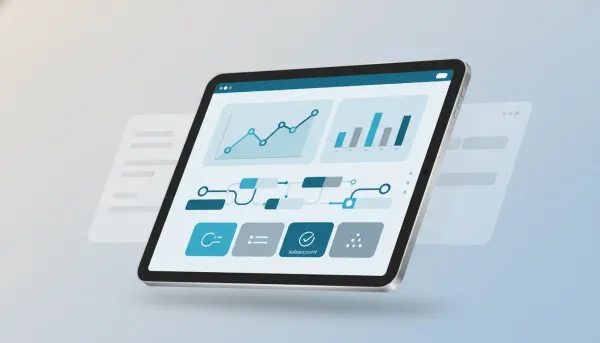
The core idea is straightforward. HighLevel can automatically generate and send a Voice AI Performance Report on a recurring cadence. That means you do not have to manually pull metrics every time you want to understand results or send an update to a client.
You choose how often you want to receive it:
- Weekly for fast-moving accounts or active optimization
- Bi-weekly for a balanced reporting rhythm
- Monthly for broader trend analysis and executive summaries
This matters more than it may seem at first. Reporting only becomes useful when it is repeatable. If you have to remember to build it each time, it often gets delayed or skipped. Automation removes that friction.
That makes the report helpful for internal teams and even more powerful for agencies that need reliable client communication.
The kind of insights included in the report
The report is designed to give a practical snapshot of Voice AI activity and performance. A few of the key metrics highlighted include:
- Sentiment on calls
- Total number of calls
- Time saved
- Success rate
- Call durations
Those metrics are not just interesting. They are the metrics that help connect Voice AI activity to business impact.
Sentiment on calls
Sentiment gives you a sense of how conversations are being received. This can help you understand whether interactions are generally positive or if there may be friction points to improve.
For agencies and operators, this can become an early warning signal. If sentiment starts to trend downward, it may point to issues in call flow, scripting, intent handling, or expectation setting.
Call volume
The number of calls handled is one of the most basic performance indicators, but it is also one of the most important. It helps establish usage and scale.
If an AI agent is consistently handling high call volume, that tells a strong story about operational support. It shows the system is not theoretical. It is active and carrying real workload.
Time saved
This is one of the easiest metrics for people to understand because it connects directly to efficiency. Time saved represents less manual effort, fewer repetitive tasks for staff, and more room for teams to focus on higher-value work.
In many cases, this is the bridge between “cool feature” and “worth paying for.”
Success rate
Success rate helps answer the question everyone eventually asks: is the AI actually doing the job well?
Depending on how the Voice AI is being used, success might mean completing a conversation properly, handling the requested task, or reaching the intended outcome. However it is defined within the system, this metric gives you a direct line into effectiveness.
Call duration
Duration adds another layer of context. Shorter is not always better, and longer is not always worse. What matters is whether the duration makes sense for the kind of interaction being handled.
When combined with sentiment and success rate, duration helps paint a more complete picture of call quality and efficiency.
Why this is especially valuable for agencies
If you run an agency on HighLevel or manage client systems through GoHighLevel, reporting is one of the most important parts of retention.
Clients do not always see the backend work. They do not always notice workflows, automations, routing logic, or system improvements unless those results are made visible. Voice AI Performance Reports help close that gap.
You can use the report to show what is happening across your client accounts without creating a custom recap from scratch every single time.
That means you can more easily demonstrate:
- How Voice AI agents are supporting operations
- Where time and labor are being saved
- How much activity is being handled automatically
- Whether conversations are trending positively
- How effective the implementation is over time
For agencies focused on scaling, this is a big deal. Manual reporting does not scale well. Automated reporting does.
It also strengthens your position as a strategic partner. Instead of simply saying, “the system is working,” you can point to actual performance indicators.
Showing clients the real value of Voice AI
One of the smartest uses of this report is client communication.
The point is not just to collect data for yourself. The point is to help people clearly see what is being done for them, how their lives are getting easier, how money is being saved, and ideally how more revenue opportunities are being created.
That message matters.
Businesses invest in CRM systems, marketing automation, and AI tools because they want better outcomes. But if those outcomes stay hidden behind the scenes, the perceived value drops.
A recurring performance report helps keep value front and center.
It turns abstract automation into visible progress.
For example, even a simple summary showing call volume, time saved, and success rate can help a client understand that their Voice AI setup is not just active, but productive. Add sentiment and duration, and now they have a fuller operational snapshot they can use to evaluate performance.
That kind of visibility builds confidence. Confidence supports retention. And retention is a huge part of sustainable agency growth.
The Complete Operating System for Growth
Join over 60,000+ agencies and businesses using HighLevel to capture more leads and close more deals. Start your trial today and get instant access to the Nexus Hub resources.
Claim Your Free Trial & BonusesHow recurring reports improve internal decision-making
These reports are not only useful for clients. They also give your team a better way to evaluate and improve Voice AI implementations.
When you receive performance data on a regular cadence, it becomes easier to spot trends instead of reacting only to isolated moments.
You can begin asking smarter operational questions, such as:
- Are certain agents performing better than others?
- Is sentiment improving after changes are made?
- Is the success rate consistent over time?
- Are call durations drifting in a way that suggests friction?
- Is the amount of time saved increasing as usage grows?
This kind of recurring insight is valuable whether you are managing one account or many.
It also fits naturally into broader HighLevel workflows and automations. HighLevel is already designed to centralize CRM, communication, and operational systems. Voice AI reporting adds another layer of clarity on top of that infrastructure.
For teams building scalable service delivery, that visibility can become a major operational advantage.
Choosing the right reporting cadence
The ability to select weekly, bi-weekly, or monthly delivery is more important than it sounds. Different businesses need different reporting rhythms.
Weekly reports
Weekly reporting is useful when an account is active, newly launched, or under active optimization. It gives you a faster feedback loop and helps you catch issues early.
Bi-weekly reports
Bi-weekly reporting works well when you want regular visibility without creating too much reporting noise. It is often a strong middle ground for agency communication and internal check-ins.
Monthly reports
Monthly reporting is ideal for higher-level summaries, stakeholder reviews, and trend analysis. It can also work well for mature implementations that no longer need constant adjustment.
The right cadence depends on how quickly the business moves, how often performance is being reviewed, and how hands-on the optimization process is.
The good news is that the report is built to be flexible enough to support all three approaches.
Why this fits the larger HighLevel ecosystem
HighLevel has become a central platform for agencies and businesses that want one place to manage CRM, marketing automation, communication, and SaaS operations. Voice AI sits naturally inside that bigger picture.
When Voice AI performance can be measured and shared consistently, it becomes easier to integrate it into your larger service model.
That could mean:
- Using reports as part of monthly client reviews
- Including Voice AI metrics in agency scorecards
- Supporting renewals and upsells with clear outcome data
- Using performance visibility to guide implementation improvements
- Positioning AI services as a measurable part of your offer
For agencies working on HighLevel setup and scaling, these kinds of systems matter. A feature becomes more valuable when it can be operated, measured, and communicated clearly.
That is what this reporting feature helps unlock.
What makes a report actually useful
Not every report creates clarity. Some just create more noise.
What makes this kind of Voice AI report useful is that it focuses on a handful of meaningful indicators tied to operational performance and business value.
A good report should help answer three core questions:
- What happened? Call volume, duration, sentiment, and success metrics provide the activity snapshot.
- Why does it matter? Time saved and success rate connect the activity to real-world value.
- Who needs to see it? Internal teams and clients both benefit from having the same clear picture.
That is why automation is such a strong fit here. When the report consistently arrives with useful information, it supports better conversations and better decisions.
Turning AI performance into a client retention tool
There is a broader lesson here for agencies and operators.
Tools alone do not retain clients. Outcomes do. And visible outcomes are even better.
When a client can regularly see how many calls were handled, how much time was saved, and how effectively the Voice AI agent performed, your service becomes easier to understand and appreciate.
That does not just justify the tool. It reinforces the value of your implementation, your strategy, and your ongoing support.
In other words, reporting is not just analytics. It is communication. It is positioning. It is retention.
And if you are building an agency around HighLevel, that is exactly the kind of system you want in place.
Final thoughts
Voice AI Performance Reports solve a simple but important problem: they make the work visible.
Instead of guessing how your Voice AI agents are performing, you can receive a recurring summary with key metrics like sentiment, calls handled, time saved, success rate, and duration. You can review it internally, use it to improve implementations, and send it to clients so they can clearly see the value being created.
For teams using HighLevel, GoHighLevel, and broader marketing automation systems, this is more than a convenience feature. It is a practical reporting layer that helps connect AI activity to business outcomes.
And when you can clearly show how a system is saving time, improving operations, and supporting growth, you are no longer just running automation. You are proving impact.
FAQ
What is the Voice AI Performance Report in HighLevel?
It is an automated report that summarizes how your Voice AI agents are performing. It can include metrics such as sentiment, number of calls, time saved, success rate, and call durations.
How often can the report be sent?
You can choose to have the report sent weekly, bi-weekly, or monthly, depending on how often you want to review performance or share updates.
Can I send the Voice AI Performance Report to clients?
Yes. One of the main benefits is being able to share the report with clients so they can see what the Voice AI system is doing for them and the value it is creating.
What metrics are included in the report?
The report includes key information such as call sentiment, total call count, time saved, success rate, and duration data.
Why are Voice AI reports important for agencies?
They help agencies show measurable results, improve client communication, and make their service more scalable by reducing the need for manual reporting.
How does this support HighLevel agency growth and scaling?
Automated reporting helps standardize how results are communicated across accounts. That supports retention, creates clearer account visibility, and makes Voice AI services easier to manage as your agency grows.