Touhid Hasan: Field Service Management in HighLevel

For a lot of agencies, the relationship with a client starts strong and ends too early.
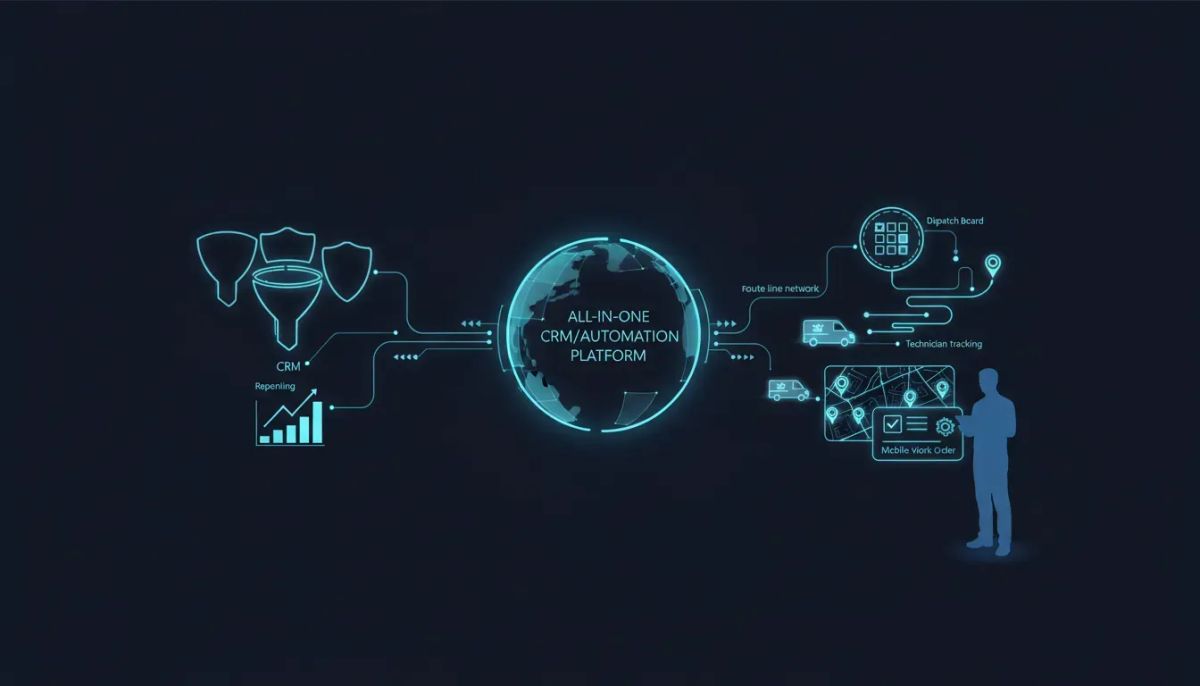
You generate leads. You build funnels. You automate follow-up. Maybe you even manage reviews and reputation. But when the business actually has to deliver the service, the system breaks apart. Suddenly the client is juggling a CRM, a dispatch tool, a routing app, a technician tracker, an invoicing platform, and a bunch of messy integrations held together with duct tape.
That gap is where retention problems begin.
The Complete Operating System for Growth
Join over 60,000+ agencies and businesses using HighLevel to capture more leads and close more deals. Start your trial today and get instant access to the Nexus Hub resources.
Claim Your Free Trial & BonusesIt is also where a major opportunity opens up.
FieldTask was built around that exact problem. The idea is simple: if HighLevel already handles the front half of the customer journey so well, why not extend it into the operational side of the business too, especially for home service companies and other field-based teams?
That is the play Touhid Hasan and his team are making. As CMO of FieldTask, he is focused on helping agencies move beyond pure marketing services and deliver something far stickier: a complete operating system for field service businesses inside HighLevel.
Why agencies need more than lead generation
There is nothing wrong with selling lead gen. It is still one of the most valuable services an agency can offer. But for industries like HVAC, plumbing, cleaning, roofing, landscaping, and other service businesses, leads are only one piece of the equation.
Once a lead becomes a booked job, the business still has to:
- Schedule the service
- Dispatch a technician
- Track field workers
- Optimize routes
- Manage job status
- Collect proof of work
- Invoice and get paid
When agencies stop at marketing, clients often end up buying the rest of their stack somewhere else. That creates tool sprawl, fragmented workflows, and a weaker agency relationship.
Touhid’s point is straightforward: if agencies can support both marketing and operations, they become far more valuable to the client and much harder to replace.
What FieldTask actually does inside HighLevel
FieldTask is a field service management platform designed specifically for HighLevel. It is not a standalone product being loosely connected through external tools. It is built to work inside the HighLevel ecosystem.
That matters.
Instead of relying on Zapier or Make to push data back and forth between unrelated systems, agencies can install FieldTask through the HighLevel App Marketplace and extend a sub-account with operational features that home service businesses need every day.
At a practical level, that includes:
- Job scheduling
- Dispatching
- Live technician tracking
- Route optimization
- Job and work order management
- Invoicing workflows
- Geofencing
- Payroll calculation
- Product and inventory sync
- Evidence and proof-of-work collection
The core idea is not to duplicate what HighLevel already does well. It is to complement it.
HighLevel already covers CRM, lead nurturing, pipelines, calendars, estimates, invoicing, reputation, and automation. FieldTask fills in the operational layer that happens between “customer said yes” and “job is complete.”
How the workflow comes together
The easiest way to understand FieldTask is to look at a typical service business workflow.
- A lead comes in through HighLevel.
- The business nurtures that lead using workflows, texting, calling, and pipeline stages.
- An estimate is sent.
- The customer accepts the estimate.
- A job is created and assigned.
- A technician is dispatched.
- The technician completes the work in the field.
- An invoice is sent and payment is collected.
- The business follows up for reviews and reputation management.
HighLevel already covers most of that customer lifecycle beautifully.
The missing piece for many agencies serving home service businesses has been the actual field operation itself. FieldTask plugs directly into that gap.
For example, once an estimate is accepted inside HighLevel, a corresponding job or work order can be created in FieldTask. The assigned technician can be notified immediately. From there, the team can manage status, dispatch, and tracking without forcing the business to bounce between separate platforms.
The unified experience is the real differentiator
Plenty of software products offer dispatching or job tracking. The real difference here is the unified experience inside HighLevel.
That has implications for both agencies and their clients.
For agencies
- You can offer a more complete service package.
- You reduce the need for custom third-party integrations.
- You create a stronger value proposition in verticals like home services.
- You improve retention by keeping more of the client’s business inside one platform.
For service businesses
- Fewer disconnected tools
- Less manual work
- Cleaner workflows between office staff and field teams
- Faster job handling from estimate to invoice
If you are already using HighLevel for CRM and marketing automation, adding field service operations to the same environment is a natural extension.
Who FieldTask is built for
The clearest fit is home service businesses.
That includes industries Touhid specifically called out, such as:
- HVAC
- Plumbing
- Cleaning
- Landscaping
- Roofing
But it is not limited to those categories.
Any business with users working in the field can potentially benefit from this setup. If a company needs dispatching, live location tracking, route planning, geofencing, or proof of job completion, the use case becomes relevant.
That is important for agencies thinking beyond one niche. The bigger theme is not “home services only.” The bigger theme is field-based operations inside HighLevel.
Key integrations inside HighLevel
One of the strongest parts of the FieldTask approach is how tightly it connects to features many agencies already use in HighLevel.
Contacts and customers
Customer data already stored in HighLevel can sync into FieldTask, which means field teams do not have to hunt through separate systems just to find the right contact or job details.
Calendars and appointments
Appointments booked inside HighLevel can be tied into dispatch workflows, helping businesses move from booked service calls to technician assignments without extra setup.
Products and inventory
If products and inventory are being managed in HighLevel, FieldTask can connect to that data so operational workflows stay aligned.
Staff and members
Internal users in HighLevel can sync with FieldTask, making team setup more seamless.
Invoicing
After a job is completed, a technician can mark it done and trigger invoicing through the HighLevel account. Since payment tools like Stripe are already connected in many accounts, there is less duplication and less friction.
Timesheets
One feature added based directly on agency feedback was timesheet integration. In one example, a roofing business needed time data tied to contacts and opportunities. That led to a feature that allows hours from completed jobs to flow into HighLevel more efficiently.
This is a good example of what makes the HighLevel ecosystem interesting in the first place. Once the right pieces are connected, agencies can create highly tailored systems instead of generic software stacks.
Built by agency feedback, not guesswork
One of the most interesting parts of Touhid’s story is how FieldTask evolved.
The first version launched in late 2024 as a minimum viable product. By his own description, it was basic. Limited capabilities. Plenty of room to improve.
What happened next is what often separates useful software from forgettable software: they listened closely to agencies using it.
That feedback loop shaped major parts of the product, including:
- The job creation workflow, which was redesigned after agencies compared it to tools like Jobber and suggested a simpler structure
- Route optimization, which was added because agencies serving route-heavy businesses needed it
- Timesheet integration, which was developed for a roofing-related use case
The broader lesson here applies well beyond this one platform. Agencies are often closest to the end customer’s daily pain points. When software builders actually collaborate with them, the product gets better faster.
That is also very much in line with how HighLevel itself has grown: through community feedback, implementation realities, and agency-led innovation.
Pricing and resale opportunity for agencies
FieldTask is offered as a subscription, and the pricing is based on the number of users in a sub-account.
The four plan tiers Touhid shared are:
- $40 per month
- $80 per month
- $160 per month
- $240 per month
The Complete Operating System for Growth
Join over 60,000+ agencies and businesses using HighLevel to capture more leads and close more deals. Start your trial today and get instant access to the Nexus Hub resources.
Claim Your Free Trial & BonusesThe ideal plan depends on team size. If a service business has eight field technicians, for example, the appropriate plan would be the tier covering roughly 5 to 10 users.
What makes this especially attractive for agencies is the resale model.
Like other SaaS offers inside HighLevel, agencies can package FieldTask into their own service bundles and resell it at their own pricing. Touhid mentioned examples of agencies taking a $40 base plan and selling it at $80 or even $120.
That creates two very real benefits:
- A new recurring revenue stream
- A stronger retention mechanism
Instead of charging only for marketing setup or monthly lead management, agencies can become the provider of a core operating system the client depends on daily.
Why retention improves when operations stay inside one system
This may be the biggest takeaway for agencies.
When a client uses one platform for marketing and another for operations, they can easily decide they only need one of those vendors. Often, the agency ends up being the more replaceable piece because the operational software becomes central to the business.
But if the agency owns the implementation of both sides inside HighLevel, the relationship becomes much deeper.
Now the client is not just paying for ads or automations. They are relying on a system that helps run the business from lead intake all the way to job completion and payment collection.
That kind of agency setup is harder to churn from and much easier to scale.
Mobile app and field usability
Field software only works if field teams can actually use it on the go.
FieldTask includes a mobile app for end users in the field. That app supports operational tasks such as:
- GPS tracking
- Clocking in and out
- Submitting job evidence
- Managing activity from the field
The evidence management feature is especially useful. A technician can document completed work directly inside the app, helping businesses maintain proof of service without adding another specialized tool.
That means agencies can potentially replace additional services a client may already be paying for, while giving them a cleaner experience inside the same ecosystem.
Where AI fits into field service management
AI is not being treated as a gimmick here. The focus is operational usefulness.
One planned AI feature Touhid described is intelligent dispatching based on proximity and availability. Instead of manually checking which worker is closest to the customer and then making the assignment, the system would suggest the best technician automatically. In some cases, it could even auto-assign based on available rules.
Another promising direction is the use of HighLevel’s AI calling capabilities.
Because FieldTask already deals with GPS tracking and geofencing, it can know when a technician is approaching a job site. That opens the door to automated customer notifications, such as a call telling the customer that the service pro is ten minutes away.
Used well, AI in this context is not about novelty. It is about reducing manual coordination, improving customer communication, and making agencies look even more indispensable.
Support philosophy and customer success
No matter how good a tool is, support matters. Especially when agencies are deploying it across real client operations.
FieldTask’s support model currently includes:
- 24/7 live chat support
- Bookable support calls
- Email support
- Phone support
That is a meaningful point for agencies evaluating implementation risk. If you are introducing a field operations layer into a client account, quick access to help is not optional.
The bigger goal for 2026
Touhid was clear about the long-term ambition: when agencies think about field service management inside HighLevel, FieldTask should be the default answer.
That is a bold target, but it makes sense.
HighLevel has become a serious platform for CRM, marketing automation, SaaS operations, and agency systems. As more vertical-specific tools emerge inside the ecosystem, the agencies that win will be the ones that know how to combine those layers into practical, revenue-generating solutions.
Field service management is one of the strongest examples of that shift.
What agencies should take away from this
If you serve home service businesses, or want to, there are really three big ideas here.
- First, marketing alone is no longer the full opportunity. Clients need operational systems, not just leads.
- Second, HighLevel becomes more powerful when paired with niche execution tools inside its ecosystem. That is where implementation strategy starts to matter.
- Third, agencies that package software and service together create stronger retention and better margins.
For anyone building a HighLevel agency setup around home services, this is the kind of offer that can sharpen positioning quickly. Instead of saying, “We help plumbers get more leads,” you can say, “We help plumbers manage the full customer journey from lead to dispatch to invoice inside one system.”
That is a different conversation. And usually, it is a more valuable one.
Getting started inside HighLevel
FieldTask is available through the HighLevel App Marketplace and requires a HighLevel environment to run. It is not sold separately outside that ecosystem.
There is also a 10-day free trial, which makes it easier to test inside a sub-account and see whether the workflow fits your agency model or client niche.
If you are still building out your stack, this is also a strong reminder of why a HighLevel free trial is worth taking seriously. Once you see how CRM, automations, SaaS resale, and vertical-specific tools can come together, the platform starts to look less like “just another CRM” and more like infrastructure for agency scaling.
And if you are trying to implement more advanced systems, templates, or niche-specific offers, joining a community like the Nexus Hub can help shorten the learning curve with resources and implementation support.
FAQ
What is FieldTask in HighLevel?
FieldTask is a field service management platform built specifically for HighLevel. It adds operational features like dispatching, scheduling, technician tracking, route optimization, job management, geofencing, invoicing support, and proof-of-work tools for businesses with teams in the field.
Does FieldTask work outside of HighLevel?
No. FieldTask is designed as a HighLevel-only platform. A business or agency needs to be using HighLevel in order to install and run it.
Who should use FieldTask?
It is a strong fit for agencies serving home service businesses such as HVAC, plumbing, cleaning, landscaping, and roofing. It can also work for other businesses that manage field workers and need dispatching, tracking, and job workflows.
How is FieldTask priced?
FieldTask uses subscription pricing with four tiers: $40, $80, $160, and $240 per month. The plan depends on the number of users in the sub-account, such as how many technicians or staff members need access.
Can agencies resell FieldTask?
Yes. Agencies can bundle FieldTask into their own SaaS offers and resell it at their own pricing, similar to other HighLevel-based solutions. That creates an additional recurring revenue opportunity.
Does FieldTask include a mobile app?
Yes. There is a mobile app for field users. It supports features like GPS tracking, clocking in and out, job evidence submission, and on-the-go field activity management.
What HighLevel features does FieldTask integrate with?
FieldTask integrates with several HighLevel capabilities, including contacts, calendars, appointments, estimates, invoicing, staff or member records, products, inventory, and other account data used in operational workflows.
Is AI part of the FieldTask roadmap?
Yes. Planned AI features include smarter dispatching based on proximity and availability, as well as customer communication workflows that could work alongside HighLevel’s AI calling capabilities.
How can someone try FieldTask?
FieldTask can be installed through the HighLevel App Marketplace, and it currently offers a 10-day free trial for testing inside a HighLevel sub-account.
The Complete Operating System for Growth
Join over 60,000+ agencies and businesses using HighLevel to capture more leads and close more deals. Start your trial today and get instant access to the Nexus Hub resources.
Claim Your Free Trial & Bonuses