Taxes Are Now Supported for Rentals in HighLevel

If you manage rental listings inside HighLevel, this is one of those updates that immediately makes life easier.
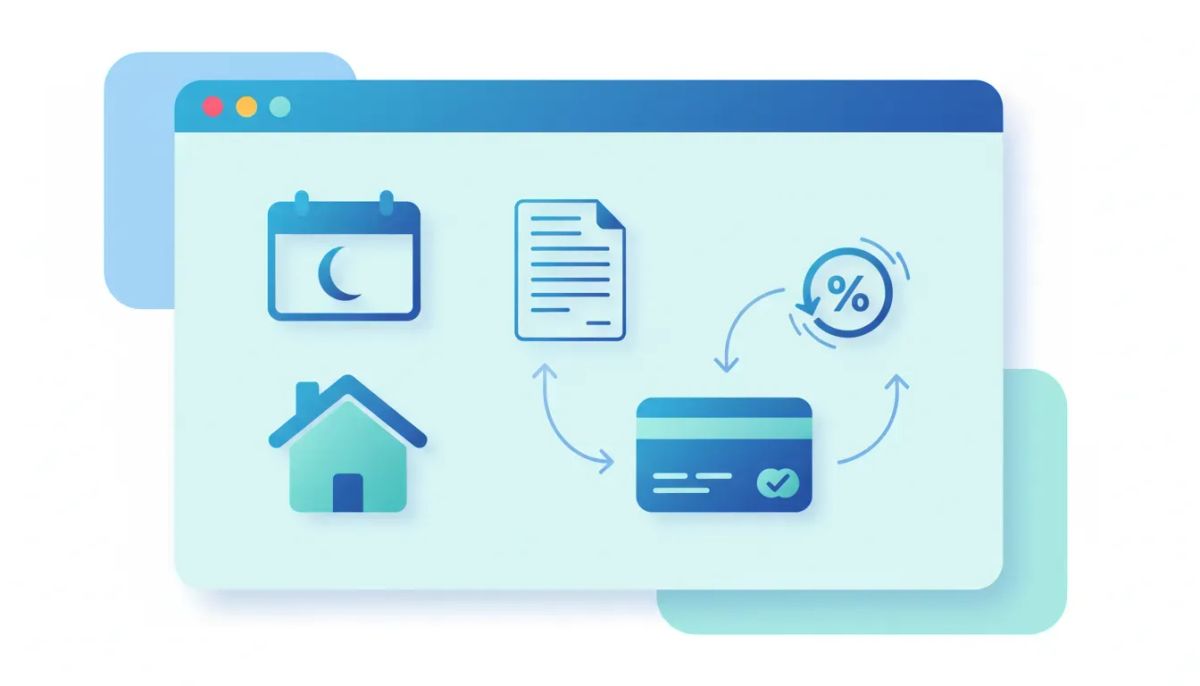
Manual taxes are now supported for rentals, which means you can configure taxes for rental listings and have those taxes automatically apply to bookings. That gives you more control over pricing, cleaner checkout behavior, and a more transparent experience for customers booking rentals.
For agencies, rental businesses, and anyone building operational systems inside GoHighLevel, this is a practical improvement. It removes friction from the rental workflow and helps make pricing more accurate without relying on workarounds.
It is a straightforward update, but it solves a very real need. If you have to charge taxes on rentals, you have to charge taxes on rentals. Now HighLevel supports that directly.
The Complete Operating System for Growth
Join over 60,000+ agencies and businesses using HighLevel to capture more leads and close more deals. Start your trial today and get instant access to the Nexus Hub resources.
Claim Your Free Trial & BonusesWhat changed
HighLevel now allows you to configure manual taxes for rental listings. Once taxes are set up, they are automatically applied to rental bookings.
This matters because rental pricing is rarely as simple as listing a flat amount and calling it done. In many cases, taxes are part of the booking process, and if they are not handled properly, it creates confusion for both the business and the customer.
With this update, HighLevel adds more flexibility and control to the rental side of the platform by making tax configuration part of the listing and product setup.
At a glance, here is what is included
- Support for manual taxes on rental listings
- Automatic tax application during rental bookings
- Tax configuration tied to the listing’s associated product
- Variant-level tax configuration when rental variants are enabled
- Availability in desktop and mobile-friendly views
One important detail: only manual taxes are currently supported for rentals. So if you are setting this up, the tax needs to be configured manually within the associated product settings.
Why this update matters for rental businesses
Tax support may sound like a small feature on the surface, but operationally it has a big impact.
Rental businesses often juggle inventory, pricing, booking logistics, and customer communication all at once. When taxes are missing from that flow, teams end up patching the gap manually, which increases the chance of pricing errors and extra admin work.
By adding tax support directly to rentals, HighLevel helps streamline several things at once:
- Pricing becomes more transparent because taxes are automatically included in the booking flow once configured.
- Manual follow-up is reduced because teams do not need to calculate or explain missing taxes after the fact.
- Operations become cleaner because listings and product settings work together in a more structured way.
- Variant pricing stays flexible because each variant can link to its own product and tax setup.
For agencies managing client accounts in GHL, this is especially useful. If you support clients in event rentals, equipment rentals, property-related services, or any other rental-driven model, this gives you a better implementation path inside the platform.
It also supports one of the larger goals of good HighLevel agency setup: building systems that are easier to maintain, easier to explain, and less dependent on manual intervention.
How taxes for rentals work in HighLevel
The key thing to understand is that each rental listing is connected to a product under Payments and Products. That product is what HighLevel uses for tax configuration.
So rather than setting tax in a completely separate rental-only panel, the platform uses the product relationship behind the scenes. This keeps things consistent with the broader HighLevel payments structure.
Here is the basic logic:
- A rental listing exists inside the Rentals area.
- That listing is associated with a product in Payments and Products.
- You configure manual taxes on that product.
- Those taxes then apply automatically when the rental is booked.
If your listing includes variants, the setup gets even better.
Variant-level tax configuration is supported because each variant links to its own product. That means different rental options can have their own tax setup where needed.
That is a strong design choice for businesses that offer multiple rental options under one listing. Instead of forcing one blanket setup across everything, HighLevel gives you more precise control.
How to configure taxes for a rental listing
The process is simple once you know where the settings live.
Step 1: Go to Rentals Listings
Open your rental listing inside HighLevel and choose the listing you want to update.
Step 2: Edit the listing
Within the listing, go to the section where pricing and inventory are managed.
Step 3: Click “Configure Tax for this Listing”
You should see a call-to-action for configuring tax on that listing. Selecting it redirects you to the associated product inside Payments and Products.
Step 4: Add or update manual taxes
Once inside the product settings, add the appropriate manual tax configuration. If taxes already exist, update them as needed.
Step 5: Save and apply
After setup, taxes will automatically apply to future rental bookings for that listing.
That is the entire flow. No complicated workaround, no custom patching, and no need to bolt tax handling onto the side of your rental process.
How variant-level tax configuration works
This is one of the more useful parts of the update.
If your rental listings use variants, HighLevel supports tax configuration at the variant level. The reason this works is because each variant is linked to its own product. Since tax settings live on the product side, each variant can carry its own tax setup.
That gives you flexibility in situations where variant options are not treated the same way operationally.
From a systems perspective, this is a smart fit with how HighLevel already handles products and pricing. Instead of introducing a separate tax architecture just for rentals, the platform extends the existing product relationship in a way that keeps configuration more organized.
If you are building out client accounts or internal operations, that kind of consistency matters. It reduces confusion and makes account setup easier to document and repeat.
Why variant-level support is valuable
- It keeps pricing logic connected to the correct product
- It supports more granular rental setup
- It helps agencies create cleaner implementation standards inside GHL
- It reduces the need for one-size-fits-all tax handling
Even if your current setup is simple, having this flexibility available gives you room to scale later without rebuilding your rental structure from scratch.
What this means for pricing transparency
One of the biggest practical benefits here is transparency.
When taxes automatically apply to rental bookings, the final price is easier to understand. That helps avoid the awkward moment when a customer expects one number and gets another, or when your team has to explain why tax was added manually after the fact.
Transparent pricing is not just a convenience issue. It affects trust, booking confidence, and the smoothness of the overall purchase experience.
Inside HighLevel, where agencies and businesses are often trying to unify CRM, payments, marketing automation, and service delivery in one system, these small operational improvements add up quickly.
A cleaner booking flow means:
- Less confusion at checkout
- Fewer support questions
- More accurate order totals
- A more polished customer experience
And when those pieces are handled correctly inside the platform, your workflows and automations downstream become easier to trust.
The Complete Operating System for Growth
Join over 60,000+ agencies and businesses using HighLevel to capture more leads and close more deals. Start your trial today and get instant access to the Nexus Hub resources.
Claim Your Free Trial & BonusesA better fit for agencies building rental systems in GoHighLevel
If you are an agency using HighLevel to support rental-based clients, this update is more than a convenience feature. It is another step toward making GHL a more complete operating system for niche business models.
Rental businesses often need a blend of:
- Lead capture and CRM management
- Booking and payment handling
- Clear pricing logic
- Automated follow-up and reminders
- Reliable back-end setup that clients can actually use
That is where HighLevel continues to stand out. As more pieces like rentals, payments, products, and automations work together more cleanly, agencies can build stronger systems with fewer external tools.
From an implementation standpoint, this update also reinforces a good best practice: tie operational setup to the correct system object. In this case, taxes are managed on the associated product, which keeps billing logic close to the pricing structure it belongs to.
That kind of alignment is what helps agency systems scale.
Where to find more help
If you want official setup details, HighLevel has a help document available through the support center. Search for taxes for rentals on help.gohighlevel.com for the relevant guide.
That is the best next step if you want screenshots, platform-specific navigation, or confirmation on your exact setup flow.
If you are building more advanced rental processes inside HighLevel, this is also a good time to review how your products, listings, and variants are structured. The cleaner the foundation, the easier it is to manage taxes, pricing, and booking behavior going forward.
Practical setup tips before you turn this on
Even though the feature itself is simple, a few practical checks can save time.
- Confirm the listing is linked to the correct product in Payments and Products.
- Review manual tax settings carefully before applying them live.
- Check variant mappings if you use multiple rental options.
- Test a booking flow after setup so you can verify taxes apply as expected.
- Document the setup if you manage multiple client sub-accounts or internal teams.
These are not special platform requirements, just good implementation habits. The more structured your setup is, the easier it is to troubleshoot and maintain.
Why this update is worth paying attention to
There are platform updates that sound exciting but do not change much day to day. This is not one of those.
Tax support for rentals solves a real operational problem. It reduces manual work, improves booking accuracy, and helps businesses present pricing more clearly. For anyone using HighLevel as a central system for sales, operations, and payments, that is meaningful.
It also shows the platform continuing to mature in practical ways. Not every improvement needs to be flashy. Sometimes the best updates are the ones that remove friction from everyday business processes.
If rentals are part of your business model or part of a client implementation, this is definitely a feature worth enabling.
FAQ
Are taxes now supported for rentals in HighLevel?
Yes. HighLevel now supports manual taxes for rental listings, and those taxes automatically apply to rental bookings once configured.
What type of taxes are supported for rentals?
At this time, only manual taxes are supported for rentals.
Where do I configure taxes for a rental listing?
You start in Rentals Listings, edit the listing, and use the option to configure tax for that listing. HighLevel then redirects you to the associated product under Payments and Products, where you add or update the manual taxes.
Do taxes apply automatically after setup?
Yes. Once manual taxes are configured on the associated product, they automatically apply to rental bookings for that listing.
Can I configure taxes at the variant level?
Yes. Variant-level tax configuration is supported because each variant links to its own product.
Why is this useful for agencies using GoHighLevel?
It helps agencies create cleaner rental workflows for clients, improves pricing transparency, and reduces manual tax handling. It is a practical enhancement for teams building scalable systems inside GHL.
Where can I find the official help documentation?
Go to help.gohighlevel.com and search for taxes for rentals.
Final thoughts
HighLevel rental tax support does exactly what a good product update should do. It removes friction, adds control, and makes the platform more useful for real businesses.
If your rental setup needs taxes, you can now configure them directly inside HighLevel and let them apply automatically to bookings. If you use variants, you also get variant-level flexibility through the linked product structure.
Simple update, real value.
If you are still building out your HighLevel environment, this is a good reminder to think beyond just pages and pipelines. The real power of GoHighLevel comes from how CRM, payments, automations, and operational systems work together. And when features like this are wired in correctly, the whole setup gets stronger.
If you have not started yet, consider exploring a HighLevel free trial to test how rentals, payments, and automations fit into your business model. And if you want implementation help, templates, and practical support for agency systems, the Nexus Hub community is a smart place to continue building.
The Complete Operating System for Growth
Join over 60,000+ agencies and businesses using HighLevel to capture more leads and close more deals. Start your trial today and get instant access to the Nexus Hub resources.
Claim Your Free Trial & Bonuses