Day 2: Your Customer Journey Blueprint

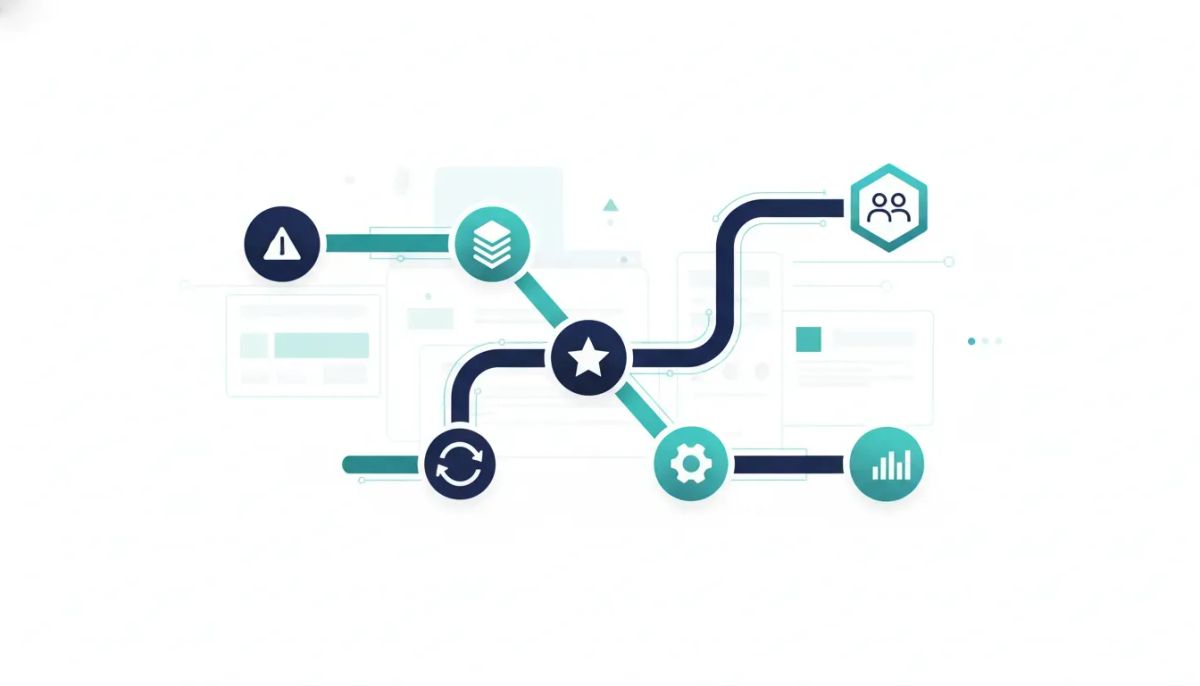
If you want to build better marketing, better automation, and better systems in HighLevel, start here: the customer journey is not just a marketing asset. It is the structure underneath your whole business.
That means sales, onboarding, fulfillment, follow-up, reporting, operations, and even team handoffs. It is all customer journey work.
A lot of people treat customer journey mapping like a nice strategy exercise. It is not. It is the operating system for how leads become customers, how customers become advocates, and how your business stops leaking time and money.
And if you are building inside HighLevel, GoHighLevel, or any CRM and marketing automation platform, this matters even more. Because the platform is flexible enough to let you build almost anything. That is a blessing, but it can also become chaos if you build before you think.
The Complete Operating System for Growth
Join over 60,000+ agencies and businesses using HighLevel to capture more leads and close more deals. Start your trial today and get instant access to the Nexus Hub resources.
Claim Your Free Trial & BonusesThe real role of the customer journey
When people talk about customer journey, they often mean top-of-funnel marketing. Lead magnets. Landing pages. follow-up emails. Ads. Calendars.
That is only part of the picture.
A proper customer journey includes:
- How prospects find you
- How they express interest
- How you capture their details
- How you nurture them if they are not ready yet
- How you make the offer
- How you close the deal
- How you onboard them
- How your team gets notified and activated
- How delivery happens
- How you gather reviews, case studies, and referrals
In other words, customer journey is everywhere in your business. If you are serious about marketing automation, CRM implementation, or HighLevel agency setup and scaling, you cannot afford to treat it like a side project.
What a simple customer journey actually looks like
One of the smartest principles shared in this workshop was this: do not build a complicated customer journey if you can channel people into one simple place.
For Lisa, that place is a discovery call.
People may come from social media, referrals, blogs, LinkedIn posts, workshops, webinars, community spaces, or the HighLevel certified admin directory. But all those top-of-funnel activities are guiding people toward one key conversion point.
That matters because simplicity scales.
Here is the rough structure she described:
- Target and attract through content, referrals, appearances, and lead magnets
- Capture through opt-ins and forms
- Engage through email sequences, community, and nurturing
- Convert through a discovery call, proposal, and invoice
- Onboard with automated backend actions, project setup, and kickoff
- Deliver and impress with rhythm meetings, updates, and continuous improvement
- Collect proof with testimonials, case studies, and reviews
That is a complete business system, not just a campaign.
Start simple. Get fancy later.
This is one of those ideas that sounds obvious until you realize how many people ignore it.
If you are early in business, especially if you have fewer than five customers, you do not need a sprawling automation empire. You need sales activity.
Set appointments. Close appointments. Make offers. Learn what people actually want. Then build what supports that.
Too many people hide behind setup. They tweak pipelines, rename tags, redesign forms, and build complex HighLevel workflows before they have enough real customer behavior to justify any of it.
That is not strategy. That is avoidance.
The better approach is:
- Build the foundations first
- Only create what you currently need
- Expect your systems to evolve as the business grows
- Do not get emotionally attached to SOPs or automations
The business you run at $1,000 a month, $10,000 a month, and $100,000 a month are not the same business. Different thresholds create different operational needs. You will rebuild. That is normal.
How to know where to start
Once you have mapped the overall journey, the next question is not “How do I build all of this?”
The next question is: Where is the highest ROI fix in my business right now?
Lisa framed this around two currencies:
- Saving time
- Growing revenue
Those are the two most practical levers for deciding what to automate, document, or improve first.
Sometimes the best first fix is customer-facing. Sometimes it is internal. Sometimes it is not a lead generation problem at all.
She gave a great example of a business owner who thought he needed more marketing, but in reality he was avoiding new customers because his onboarding process was so painful. The real bottleneck was downstream.
That is why you cannot only look at the front end of your funnel. If your sales process is sloppy or your fulfillment is overloaded, more leads may just amplify the mess.
The ROI matrix for prioritizing your next move
A practical way to decide what to fix first is to assess each gap in your customer journey against a few simple factors:
- Impact: How much does this affect the business?
- Complexity: How hard is it to solve?
- Time cost: How much time are you losing because this is broken?
- Revenue cost: How much money is this costing you?
- Speed to results: How quickly will you feel the benefit if you fix it?
You can score each issue and prioritize the one with the strongest combination of high impact and low complexity.
That becomes your domino.
The domino is the fix that makes the rest of the business easier. Not because it is glamorous, but because it changes the flow.
Maybe it is calendar setup. Maybe it is pipeline visibility. Maybe it is an onboarding checklist. Maybe it is reminder automation. Maybe it is simply having a consistent proposal process.
Whatever it is, identify it and focus there first.
Clarity before build
Before you open HighLevel and start dragging workflow nodes around, you need clarity on a few basic things.
- Who are you selling to?
- What specific problem are you solving?
- What is the offer?
- When in the journey is that offer made?
- What outcome does the customer actually want?
If those are fuzzy, your automation will be fuzzy too.
One of the most useful distinctions in the workshop was between describing how you deliver and describing the outcome you create.
For example, saying “I run Facebook ads” is not nearly as powerful as saying “I bring people through your front door from online.”
That is the shift.
People do not buy your tools. They buy transformation.
Lisa put it in very practical terms. Her business helps people:
- Save time
- Get organized
- Grow sales
That is clear. That is memorable. That tells someone whether they need you.
Your offer should be easy to understand
If somebody cannot understand the value of what you do quickly, they will struggle to buy.
That does not mean you need a cute slogan. It means you need positioning that is simple enough to anchor the conversation.
The workshop made a strong case for reducing complexity in how you describe your business. Not a long technical list. Not platform jargon. Not a feature dump.
Just the clearest possible expression of the result.
That is especially important for agencies and consultants using HighLevel. The platform can do a thousand things, but your offer should not sound like a list of menu options.
How to plan a workflow before you build it
This was one of the most valuable operational sections.
Instead of building directly in HighLevel workflows and hoping you remember what goes where, map each process before implementation.
For every step in your customer journey, define:
- What the desired outcome is
- Where the process starts
- Where the process finishes
- What should happen in between
- What should happen if the person does not take the ideal next step
- What assets are required to make the process work
Take a discovery-call booking sequence as an example.
The process might start when someone opts in through a form. The ideal outcome is that they confirm a calendar appointment. In between, you may send reminder emails, add them to an opportunity stage, and if they do not book, place them into a contingency sequence or long-term nurture.
This is where a lot of automation gets better fast. Because instead of only asking, “What happens if they do?” you also ask, “What happens if they do not?”
That single question saves people from falling through the cracks.
The Complete Operating System for Growth
Join over 60,000+ agencies and businesses using HighLevel to capture more leads and close more deals. Start your trial today and get instant access to the Nexus Hub resources.
Claim Your Free Trial & BonusesBuild like a recipe, not like a scavenger hunt
One of the best metaphors used was baking a cake.
If you decide to bake and only realize halfway through that you are missing eggs, then vanilla, then butter, you keep running back to the store.
Automation is the same.
If you start building a HighLevel workflow before you have the form, the copy, the page, the emails, the custom fields, or the logic, you create unnecessary friction for yourself.
So document the ingredients first.
That can include:
- Landing page copy
- Email copy
- Forms and questions
- Images or lead magnet files
- Calendar settings
- Tags
- Opportunity stages
- Custom values
- Integrations or access requirements
When everything is gathered before build, implementation gets much smoother.
Documentation is how you keep your CRM sane
A lot of people resist documentation because it feels boring.
It is not boring when six months later you are trying to remember where an email fires from, what a tag does, or why a workflow exists.
Good documentation keeps your CRM tidy. It also makes it easier to hand off work, audit systems, train team members, and improve what already exists.
That is especially important in HighLevel agency operations where multiple people may be building, updating, or troubleshooting inside the same account.
Simple naming conventions make a big difference. If the form, funnel, workflow, and tag all share a logical naming structure tied to the same stage of the journey, your future self will thank you.
You do not need documentation to be pretty. You need it to be useful.
Build with the end in mind
Another key principle was to start at conversion and work backward.
Most people want to start by generating leads because that feels exciting. But if the downstream pieces are not ready, that traffic is going to hit friction.
So begin with questions like:
- Can people easily book with me?
- Can I confidently make the offer?
- Can I send the proposal or checkout link smoothly?
- Can I onboard well once they say yes?
- Can I fulfill without bottlenecks?
Once those are solid, you can safely put more energy into acquisition.
Build in the right order inside HighLevel
When you are ready to implement inside HighLevel or GoHighLevel, order matters.
Do not start with workflows if you have not created the assets those workflows need to reference.
A smarter build order looks more like this:
- Create the strategy and map the journey
- Define the offer and the desired outcome
- Create forms, fields, and calendars
- Write email and SMS copy
- Build pages or funnels if needed
- Create pipeline stages and tags
- Then build the workflows and automations
- Test the experience from beginning to end
This saves time and prevents the classic problem of building logic around assets that do not exist yet.
Should you niche down?
The workshop handled this question in a very balanced way.
Yes, niching helps. The narrower the customer, the better the conversation. Specificity improves messaging.
But that does not mean every business must only serve one exact industry in one exact way.
Sometimes your niche is the type of problem you solve. Sometimes it is the business model. Sometimes it is the implementation style. Sometimes it is the stage of business.
For example, Lisa can build customer journeys for many kinds of businesses, but not every kind of client is a fit. Her real niche is working with businesses that already know their avatar and offer and need customer journey strategy plus implementation.
That is still focus.
You can also work within a “neighborhood” of related industries if the same logic applies across them. The key is that your positioning stays clear and your systems stay organized.
Strategic partnerships matter more than people think
One of the quieter but important points was around partnerships.
You do not always need to do everything yourself. In fact, some of the best growth comes from relationships with complementary providers who serve the same audience but do not compete with you.
A website designer, copywriter, traffic specialist, automation architect, and consultant may all support the same client in different ways.
That creates a healthy ecosystem of referrals and support.
But the warning was equally important: do not jump into partnerships carelessly. Make sure values and goals align.
If you are just getting started, do this
If HighLevel feels like a giant mountain right now, take a breath.
You do not need to master the whole platform this week.
You need a plan, small consistent action, and the discipline to focus on what matters most.
Start here:
- Define who you help
- Define the outcome you create
- Map the core steps from lead to sale
- Identify the biggest time or revenue leak
- Build only the next necessary piece
- Document as you go
- Test and improve
That is enough.
Rome was not built in a day, and neither is a clean CRM, a strong automation system, or a scalable agency operation.
Keep it simple. Keep it consistent. Learn by doing.
If you are building inside HighLevel, this is also a good time to lean on the ecosystem. Start a HighLevel free trial if you have not yet, and plug into the Nexus Hub community for templates, resources, and implementation support. Getting around people who are actually building is one of the fastest ways to shorten the learning curve.
FAQ
What is a customer journey blueprint?
A customer journey blueprint is a map of how someone moves through your business from first contact to sale, onboarding, delivery, and follow-up. It helps you design better marketing, cleaner handoffs, and more effective automation inside platforms like HighLevel.
Why is customer journey important in HighLevel?
HighLevel gives you the tools to build forms, funnels, calendars, workflows, pipelines, and messaging. Without a clear customer journey, those tools can become disconnected. A customer journey blueprint helps you use HighLevel workflows and automations in a way that supports the full business process.
Should I build my full automation system before getting customers?
No. If you are early in business, focus first on generating appointments and closing sales. Build the essential systems that support that outcome. Do not hide behind setup work when you still need customer conversations and real-world feedback.
What should I automate first?
Automate the part of the journey with the highest return on effort. Usually that means fixing the biggest time drain or revenue leak. For many businesses, that is lead capture, follow-up, calendar booking, sales pipeline management, or onboarding.
Do I need documentation for my CRM and automations?
Yes. Documentation helps you stay organized, troubleshoot faster, hand work off to others, and improve your systems over time. Even simple naming conventions and a basic process map can make a huge difference in keeping your HighLevel setup clean.
Is it better to niche down to one industry?
Usually, clarity improves when you narrow your market. But your niche can also be defined by the problem you solve, the type of business model you serve, or the kind of implementation you provide. The important thing is that your offer is clear and your messaging speaks directly to the right customer.
What if HighLevel feels overwhelming?
That is normal. Start with the basics, take small consistent action, and ask for help when you need it. You do not need every feature at once. Avoid feature FOMO and focus on the tools that support your next stage of growth.
The strongest takeaway from this entire session is simple: slow down enough to build on purpose.
That does not mean moving slowly forever. It means resisting the urge to build blindly. When you know the journey, know the offer, know the bottleneck, and know the desired outcome, HighLevel becomes a powerful platform for marketing automation, CRM management, and agency systems that actually scale.
That is the blueprint.
The Complete Operating System for Growth
Join over 60,000+ agencies and businesses using HighLevel to capture more leads and close more deals. Start your trial today and get instant access to the Nexus Hub resources.
Claim Your Free Trial & Bonuses