Your Customer Journey Blueprint Day 1: How to Map a Business That Actually Scales

Most businesses make the same mistake when they start building in HighLevel.
They open the platform, create a few workflows, connect a form, maybe throw together a pipeline, and hope it all somehow turns into a smooth customer experience.
It usually does not.
What you end up with is disconnected automations, unclear handoffs, leads falling through the cracks, and a system that sort of works until the business grows. Then the cracks become canyons.
The problem is not the tool. The problem is building before you know what you are building toward.
The fix is a blueprint.
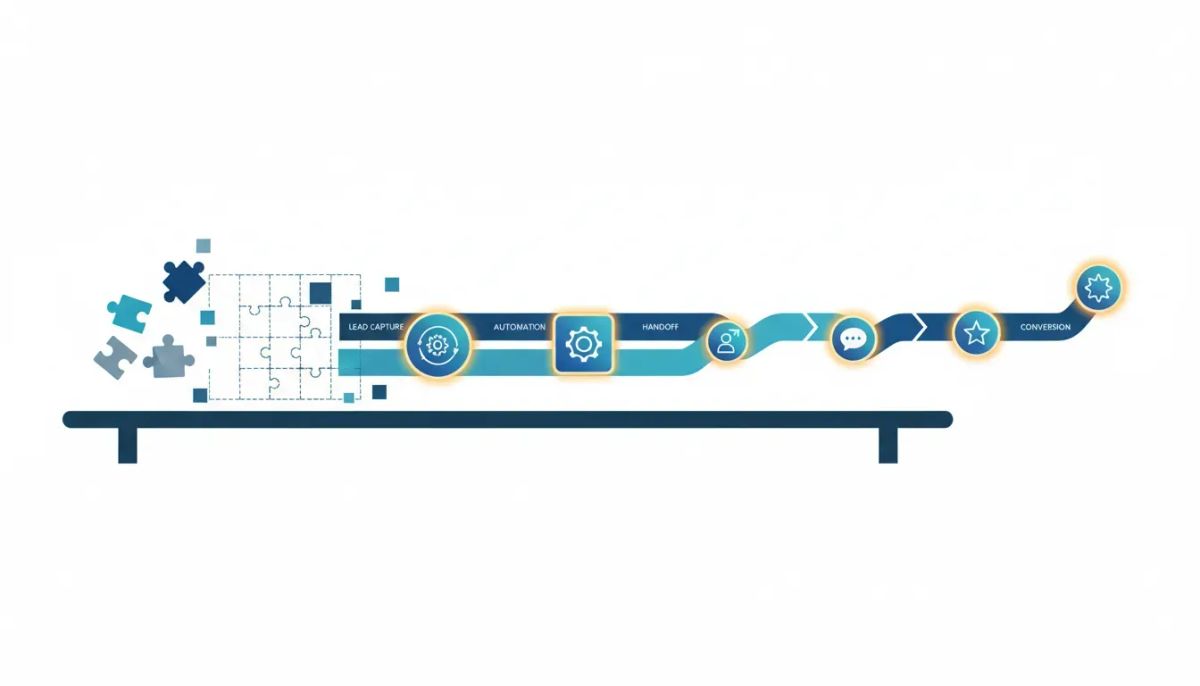
A real customer journey blueprint gives you the picture on the box before you start snapping together the Lego bricks. Without that picture, you are just guessing. And when you guess in operations, sales, marketing, and automation, the business gets messy fast.
This is the strategic foundation behind a scalable HighLevel setup: map the customer journey first, then build the automations second.
The Complete Operating System for Growth
Join over 60,000+ agencies and businesses using HighLevel to capture more leads and close more deals. Start your trial today and get instant access to the Nexus Hub resources.
Claim Your Free Trial & BonusesWhy customer journey mapping matters before you touch HighLevel
HighLevel is powerful. That is exactly why people can get themselves into trouble with it.
When a platform gives you pipelines, forms, email, SMS, automations, calendars, reputation tools, and AI, it is tempting to start wiring things together immediately. But if there is no clear plan, you are not creating a system. You are creating digital spaghetti.
A well-designed customer journey helps you:
- Convert more leads because the process is intentional
- Create a better customer experience because people know what happens next
- Increase lifetime value because retention is built in
- Generate referrals because delight and advocacy are part of the design
- Protect margin because fewer things rely on memory, manual effort, or random acts of follow-up
That last one matters more than people think. When too much of the business lives in someone’s head, or in one mysterious workflow nobody wants to touch, the business becomes fragile.
Mapping the journey changes that. It turns your business into something deliberate instead of accidental.
The three phases of a complete customer journey
The framework here is simple and practical. Every business journey can be organized into three core phases:
- Prospecting
- Converting
- Ascension and advocacy
Inside those phases are nine stages that take someone from first awareness to loyal customer and referral source.
1. Prospecting
This is where strangers become leads. It includes:
- Targeting
- Attracting
- Capturing
2. Converting
This is where leads become customers. It includes:
- Nurturing
- Making the offer
- Closing the deal
3. Ascension and advocacy
This is where customers stay longer, buy more, and bring others with them. It includes:
- Onboarding and delivery
- Impressing and retaining
- Reviews, testimonials, and referrals
That structure works across industries. It does not matter whether you run an agency, a local service business, a coaching company, a gym, an e-commerce brand, or a professional services firm. The details change, but the journey logic stays surprisingly consistent.
The 54 checkpoints that reveal where value is leaking
Here is where the framework gets sharp.
At each stage, you do not just ask what happens. You ask six better questions:
- What is the intention?
- What behavior do we want?
- What happens if they do not take that step?
- Where is the friction?
- Where could this fail?
- Where is the opportunity to improve or uplift?
Across the nine stages, those questions create 54 checkpoints.
It sounds like a lot until you realize this is exactly how businesses stop losing people silently.
For example:
- If someone opts in but does not book a call, what happens next?
- If someone books but does not show, what is the contingency?
- If someone buys but has a clunky onboarding experience, where is that trust being lost?
- If someone gets great results but nobody asks for a testimonial, how much future revenue is being left on the table?
Those are customer journey issues, not tool issues.
When the customer journey actually begins
Your customer journey starts the moment someone becomes aware of you.
Not when they fill out a form. Not when they book a call. Not when they enter your CRM.
The journey begins at first awareness, at the moment there is potential for them to become a customer in your ecosystem.
That means your map should include how people first encounter your business, what message they see, what problem they believe they have, and what action they are invited to take next.
Before you map anything, get these fundamentals clear
You cannot build a strong customer journey without clarity in four areas.
1. Know what kind of business journey you have
Different business models need different customer journey shapes.
An info business is not the same as e-commerce. A brick-and-mortar appointment-based business is not the same as a membership model. A home services company is not the same as a software offer.
And if you have multiple offers, each offer may need its own journey.
If someone buys supplements from your gym, that journey may be different from the one for personal training. Different problem, different conversation, different next steps.
2. Get painfully clear on your avatar
Trying to market to everyone is one of the fastest ways to make your message weak.
Yes, your platform may be versatile. Yes, your service may work for lots of people. But your marketing must feel like it is speaking to one person with one urgent problem.
The narrower you get, the stronger your conversion tends to be.
A useful exercise is to look at your current and past customers and ask:
- Who do I actually enjoy working with?
- What do they have in common?
- What problem am I consistently solving for them?
Then go find more of those people.
3. Know whether your audience is problem-aware or solution-aware
This distinction changes everything.
Solution-aware people know what they need. They are already searching for a dentist, a plumber, a Facebook ads specialist, or a CRM migration expert.
Problem-aware people need education first. They do not yet know the solution exists, or they do not fully understand the cost of not fixing the issue.
If your audience is solution-aware, your sales cycle can be much shorter.
If they are problem-aware, your nurture sequence needs to do more heavy lifting.
4. Find where your people are already gathering
You do not need to build an audience from scratch.
Your people are already hanging out somewhere. They are in communities, groups, events, newsletters, forums, channels, associations, and networks. This is where the Dream 100 concept becomes useful.
Ask yourself:
- What are they reading?
- Who do they trust?
- What YouTube channels are they following?
- Which social platforms are they actually active on?
- What in-person spaces do they attend?
Stop blasting content into the void. Go where they already are.
What a strong customer journey map includes
Once the foundation is clear, you can start mapping the journey itself.
The early stages usually look like this:
Targeting
Where are you putting your message?
This could be social media, SEO, YouTube, paid ads, referrals, postcards, events, TV, direct outreach, or strategic partnerships.
Attracting
How are you earning attention?
This is where your lead magnet, free trial, quiz, sample, ethical bribe, or content offer comes in. You want a direct call to action, but also a transitional one for people who are not quite ready yet.
Capturing
How are you collecting and organizing contact information?
This is where HighLevel shines. Forms, chat, inbound messages, pipelines, and workflows all need to work together so every lead enters the CRM in a known stage.
If leads are sitting in someone’s inbox or sent folder, that is not a system.
The Complete Operating System for Growth
Join over 60,000+ agencies and businesses using HighLevel to capture more leads and close more deals. Start your trial today and get instant access to the Nexus Hub resources.
Claim Your Free Trial & BonusesNurturing
This is where many businesses either win trust or ruin it.
If someone connects with you and gets immediately “pitch slapped,” that is not nurture. That is just impatience with internet access.
Nurturing means educating people, pre-answering common questions, handling objections before the sales call, and staying present long enough to become the obvious choice.
One of the smartest ways to shape nurture content is to listen to what prospects ask over and over again. If the same question keeps showing up on calls, put that answer into your emails, follow-ups, and content.
And always plan for non-action.
If someone opts in but does not book, have a contingency sequence. If they book but do not show, have a follow-up process. Great HighLevel workflows are not just about what happens when people comply. They are about what happens when they do not.
When to present the offer
Timing matters.
Present your offer too early and you scare people off. Present it too late and they lose momentum or buy elsewhere.
The right time is when the person has shown a buying signal.
That signal might be:
- Booking a call
- Clicking key links repeatedly
- Completing a quiz
- Engaging deeply with the nurture content
- Reaching a threshold in engagement scoring inside HighLevel
The core rule is simple: have a conversation before making a pitch.
Personal relevance beats generic automation every time. Even with AI tools getting stronger, people can still smell lazy outreach from a mile away.
Closing is easier when the journey is doing its job
A good sales process should not feel like dragging cold leads uphill.
When the customer journey is mapped properly, prospects arrive warmer, better informed, and more confident in what you do. That makes closing easier because your sales call becomes confirmation, not rescue.
That is one reason a strong offer matters so much. If you are fuzzy about what is included, what problem you solve, what result you help create, or what the next steps are, prospects feel that uncertainty.
Clarity closes.
After the sale: onboarding, impressing, and retaining
Many businesses pour all their energy into generating leads and almost none into what happens after payment.
That is backwards.
You do not get two chances to make a first impression after the sale. Onboarding matters. Delivery matters. Hand-off matters.
Your map should define:
- What happens immediately after purchase
- What the welcome experience looks like
- What needs to happen internally
- What the customer needs to know next
- What would make them feel confident they made the right decision
Then comes the “impress” stage.
This is where the promise meets reality. Where does the customer have the wow moment? Where do they finally feel, “Yes, this was worth it”?
Identify that moment and build around it.
Also, do not ignore reactivation and renewal. A lot of businesses think they have a lead problem when what they really have is a follow-up problem. There are often customers and prospects already in the database who would convert, renew, or re-engage if someone simply asked at the right time.
Reviews, testimonials, and case studies are not optional
If people are buying based on trust, and they are, then your reputation needs to be part of the journey.
Ask for reviews. Ask for testimonials. Capture case studies. Build before-and-after stories. Use them in proposals, landing pages, and nurture content.
You do not need giant wins to make this valuable.
In fact, smaller, relatable wins often resonate more because people can actually see themselves in them. A business owner getting their first five clients or first successful automation can be more powerful than a polished enterprise case study that feels out of reach.
The point is not to chase prestige. The point is to prove transformation.
How often should you review your customer journey?
Never “set and forget” this.
Your business changes. The market changes. Your offer changes. Technology changes. Seasons change. Customer behavior changes.
At minimum, review your customer journey monthly and monitor the metrics that tell you whether each stage is on track, off track, or at risk.
Key conversion points might include:
- Opt-ins
- Call bookings
- Show-up rates
- Proposal acceptance
- Onboarding completion
- Renewals
- Referral volume
Without those numbers, you are guessing.
With them, you can diagnose exactly where the leaks are and improve one stage at a time.
Where to start if everything feels messy
Do not try to fix the whole business at once.
Map the full journey, then identify the single biggest point of impact.
Ask:
- Where is the most expensive gap right now?
- What one fix would improve revenue, efficiency, or customer experience the fastest?
- Am I pushing more leads into a broken downstream process?
Often the smartest move is to start near the point of conversion and work backward. There is no point driving more traffic into a weak sales process or onboarding experience.
Build the machine in the right order.
Why this matters for HighLevel agency setup and scaling
If you are using HighLevel for your own business, this blueprint gives you the strategic plan before you build workflows and automations.
If you are an agency implementing HighLevel for clients, this is even more important.
Clients do not just need a CRM. They need a diagnosis. They need someone who can map their journey, identify friction, spot the gaps, and turn that into practical systems.
That is where real implementation value lives.
Great HighLevel agency setup and scaling is not about showing off features. It is about aligning CRM, marketing automation, sales process, and operational handoffs into one coherent customer journey.
Final thought
HighLevel is not the strategy. It is the engine.
If you want the engine to perform, you need the map first.
Know who you serve. Know what problem you solve. Know where those people are. Know what should happen at every stage. Then use HighLevel workflows and automations to support that journey with intention.
That is how businesses stop duct-taping systems together and start building something scalable.
If you are ready to put this into practice, a HighLevel free trial is a smart next step. And if you want templates, support, and implementation guidance, joining the Nexus Hub community can help shorten the gap between understanding the map and actually building it well.
FAQ
Do I need a HighLevel account before mapping my customer journey?
No. The mapping comes first. You should understand the strategy, stages, and handoffs in the journey before you build anything in HighLevel or GoHighLevel.
Can this customer journey framework work for any industry?
Yes. The framework is designed to work across many types of businesses, including agencies, e-commerce, home services, professional services, membership businesses, appointment-based businesses, and info products. The specifics change, but the structure remains useful.
Should every offer have its own customer journey?
Usually, yes. If different offers solve different problems, they often need different messaging, nurture, and conversion steps. A single generic journey can create confusion and lower conversions.
What is the biggest mistake businesses make in HighLevel?
Building workflows, pipelines, and automations without a clear blueprint. That tends to create disconnected systems that are hard to manage and difficult to scale.
How often should I review my customer journey map?
At least monthly. Review your key conversion points, identify what is on track or slipping, and adjust the journey as your business, market, and offers evolve.
What should I fix first if my systems are already messy?
Start with the highest-impact gap. Often that means improving the conversion or onboarding stages before trying to drive more leads into the system. Fix the bottleneck before adding more volume.
The Complete Operating System for Growth
Join over 60,000+ agencies and businesses using HighLevel to capture more leads and close more deals. Start your trial today and get instant access to the Nexus Hub resources.
Claim Your Free Trial & Bonuses