Day 1: Your Customer Journey Blueprint

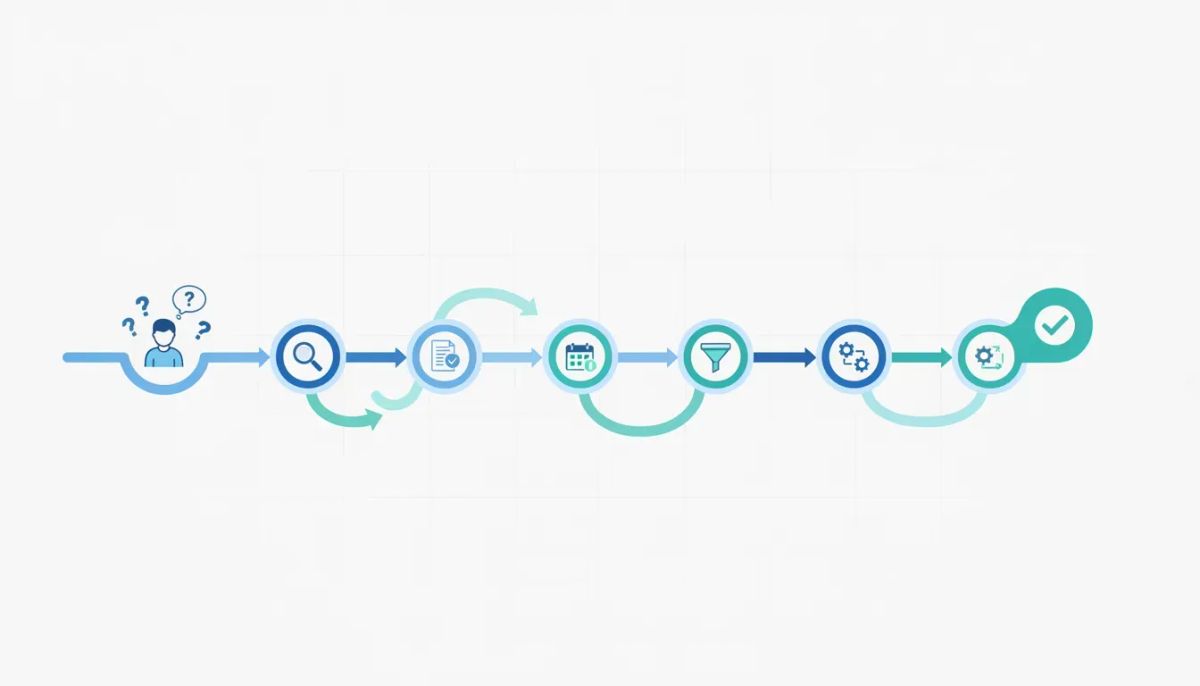
A lot of people build automation the way kids build with leftover Lego pieces. They start clicking, stacking, connecting tools, and hoping the thing stands up. Sometimes it does, for a while. Then a lead falls through a gap, a follow-up never fires, nobody knows who built what, and the whole setup turns into digital duct tape.
That is exactly why a customer journey blueprint matters.
If you use HighLevel, GoHighLevel, or any CRM and marketing automation platform, the temptation is always the same. Open the software first. Build later. Think never. But the businesses that scale well do the opposite. They design the customer journey before they start assembling workflows and automations.
The goal is not to build more stuff. The goal is to build the right path so prospects move through your business clearly, smoothly, and intentionally.
When that happens, you convert more leads, create a better customer experience, keep clients longer, increase lifetime value, and generate more referrals without constantly chasing new people at the top of the funnel.
The Complete Operating System for Growth
Join over 60,000+ agencies and businesses using HighLevel to capture more leads and close more deals. Start your trial today and get instant access to the Nexus Hub resources.
Claim Your Free Trial & BonusesThe core mindset: stop throwing tools together
Automation is not magic. It is structure.
One of the best metaphors for customer journeys is the picture on a Lego box. If you do not know what the finished model is supposed to look like, you cannot know which pieces you need. And if you do not know which pieces you need, you end up with a weird lopsided construction that might hold together short term but will not support growth.
That is what happens in businesses every day. A form here. A calendar there. An email sequence nobody remembers writing. A sales pipeline with stages that do not match reality. Bits of knowledge living inside one person’s head. Eventually the system becomes fragile, confusing, and dependent on manual rescue.
A customer journey blueprint is the antidote. It forces you to answer three questions:
- What experience are we trying to create?
- What should happen next at each stage?
- What happens if the prospect or client does not do what we hoped?
That final question is where most businesses fall down. They plan for the ideal path, but not for real human behavior.
The Customer Journey Blueprint framework
The framework is simple enough to grasp, but deep enough to run almost any business model.
It is built around three phases:
- Prospecting
- Converting
- Retention and advocacy
Inside those three phases are nine stages:
- Target
- Attract
- Capture
- Nurture
- Engage
- Offer
- Close
- Onboard and deliver
- Impress, retain, and get referrals
From there, each stage gets examined through six lenses:
- Intention: what should happen here?
- Behavior: what do we want the contact to do?
- Consequence: what if they do not do it?
- Friction: are we making this harder than it needs to be?
- Failure points: where can this break?
- Opportunity: where can we improve or increase value?
That creates 54 checkpoints across the journey. It sounds like a lot until you realize how much guesswork it removes.
Where a customer journey actually starts
A customer journey begins the moment someone becomes aware of you.
Not when they buy. Not when they book a call. Not when they opt in.
The journey starts at first awareness, at the moment there is any possibility they could enter your ecosystem.
That matters because many businesses think only in terms of lead capture. But if the messaging, positioning, and targeting before the opt-in are weak, then no amount of HighLevel workflows and automations will save the system downstream.
Before you build anything, get these four fundamentals right
1. Know what kind of business journey you have
Not every niche behaves the same, but many business models do.
An ecommerce brand, an appointment-based clinic, a membership business, a professional service, and a home services company each follow different customer journey patterns. If your business has multiple offers, each offer may need its own journey.
For example, if a gym sells personal training and nutritional supplements, those are not the same path. Some people may only want supplements. Others may want coaching as well. One offer, one journey is usually the safest starting point.
2. Get painfully clear on your avatar
Trying to serve everyone is one of the quickest routes to vague marketing.
Yes, your platform may support lots of industries. Yes, your service may work for several customer types. That does not mean your message should try to speak to all of them at once.
Marketing is a conversation around a problem. If the conversation is fuzzy, nobody feels seen.
The narrower you get, the better your results tend to be. You do not need the whole pie. You need your slice of it.
A useful exercise is to look at your current and past clients and ask:
- Who did I actually enjoy working with?
- What kind of problems did they have?
- What made them a good fit?
- What kinds of clients drained the team or created friction?
That gives you far better targeting than broad labels like “coaches,” “dentists,” or “small businesses.”
3. Understand problem-aware vs solution-aware buyers
This one changes your entire marketing strategy.
Solution-aware buyers already know what they need. They are searching for a plumber, a Facebook ads agency, a CRM, or an automation consultant. They are easier to convert because they already believe in the category.
Problem-aware buyers know something is wrong, but they may not know the solution exists yet. They need education, nurturing, and trust-building.
That distinction explains why some leads close quickly and others take months. If someone already worked with an agency before, they usually need less education than someone hiring one for the first time. The first group needs a better provider. The second group still needs to be sold on the whole idea.
4. Find where your audience already gathers
You do not need to build an audience from scratch. Your people are already somewhere.
This is where the Dream 100 idea becomes useful. Find the communities, channels, influencers, events, groups, and platforms where your ideal clients already spend time.
That could be:
- Facebook groups
- YouTube channels
- Industry events
- Trade associations
- Podcasts
- Referral networks
- Offline locations or local communities
Do not spread yourself thin trying to dominate every channel. Pick one place where your ideal audience is already active and become useful there.
The first half of the blueprint: prospecting and conversion
Target and attract
Once you know who you want and where they are, the next question is simple: how will they notice you?
Your attraction mechanism could be content, paid ads, social media, referrals, SEO, a workshop, a lead magnet, a free trial, a sample, a quiz, or an educational resource.
The key is to offer value that is relevant to the problem they care about.
And there is an important rule here: do not be stingy with value. Give generously. Share what you know. Most people are not going to implement everything themselves anyway. Valuable content demonstrates competence.
Capture every entry point
If someone shows interest, you need to know it.
That sounds obvious, but businesses still lose leads through inboxes, DMs, contact forms, missed calls, and disconnected systems all the time. HighLevel shines here because it gives you one place to capture and track leads across channels, then move them into CRM pipelines and automation.
The principle is straightforward: every meaningful point of entry should feed your system.
And every lead should land in a pipeline stage that reflects reality.
Nurture without being creepy
This is the stage a lot of people ruin by trying to sell too soon.
If someone connects with you and instantly gets a hard pitch, that is not nurturing. That is what Lisa calls the “pitch slap,” and honestly, that description is perfect.
Nurturing is about building trust, answering questions, handling objections early, and helping people understand why your offer makes sense.
A great way to build nurture content is to look at your sales calls and identify the questions people ask over and over again. Those are the questions your emails, videos, ads, and follow-up sequences should answer before the sales conversation even happens.
And just as important, plan for non-action. If someone fills out a form but does not book a call, what happens next? A good HighLevel workflow can trigger reminder emails, FAQs, educational follow-ups, and abandoned-action sequences automatically.
The Complete Operating System for Growth
Join over 60,000+ agencies and businesses using HighLevel to capture more leads and close more deals. Start your trial today and get instant access to the Nexus Hub resources.
Claim Your Free Trial & BonusesKnow when to present the offer
Timing matters.
Put the offer in front of someone too early and you spook them. Too late and they get distracted or buy elsewhere.
The right moment usually shows up through buying signals:
- They opted in
- They clicked key links
- They replied to a message
- They engaged with your content repeatedly
- They booked a call
HighLevel engagement scoring and contact activity can help here, but the larger principle is human. Have an actual conversation. Make the next step feel relevant, not forced.
If you use discovery calls, do not frame them like a pressure-packed sales ambush. Frame them as a valuable strategic conversation. People should leave understanding the problem better and seeing a path forward.
After the sale: where real retention starts
Close with as little friction as possible
When someone is ready to buy, do not make them wait three days for a proposal or chase you for payment links.
Have templates ready. Have deposit options ready. Have your proposal, invoice, checkout, or estimate process designed before you need it.
Momentum matters.
Onboarding is your first major trust test
You do not get two chances to make a first impression.
Once money changes hands, people naturally wonder if they made the right decision. A strong onboarding experience removes that anxiety. It tells them what happens next, what they need to do, what you are going to do, and how success will be measured.
This is also where operational handoffs matter. If team members need to pick things up internally, your systems must support that. Great client experience is not just customer-facing. It is operational too.
Impress people on purpose
Every business should know its “wow moment.”
At what point does the client think, “Okay, this is brilliant”?
It might be the onboarding. It might be the first dashboard. It might be the first result. It might be the clarity they gain from seeing their whole business mapped properly for the first time.
Do not leave that moment to chance. Design it.
Retention is often easier than acquisition
One of the biggest mistakes in marketing is assuming the problem is always “we need more leads.”
Sometimes the faster win is reactivation.
You may already have:
- Old leads who were never followed up properly
- Past customers who could return
- Expiring contracts that should be renewed
- Clients who could buy a second offer
Very often, the next 5 to 10 clients are already in your world somewhere. They just need the right re-engagement system.
Ask for reviews, testimonials, and case studies
This is the part businesses skip even when they are doing great work.
Reputation does not build itself. You need a review strategy.
Pick the platform that matters most for your business and ask consistently. You do not need social proof scattered everywhere. You need it where your prospects will actually look.
Also, do not wait for huge wins. Small wins are incredibly powerful. A first automation launched. A first five customers. A first saved hour each day. Those stories are relatable, and often more persuasive than giant enterprise success stories.
How to improve your customer journey over time
Never treat your journey as finished.
Business changes. Markets shift. seasons change. Offers evolve. AI shows up and changes customer expectations. The best systems are reviewed regularly.
A good rule is to measure each conversion point in the journey:
- How many people saw the offer?
- How many opted in?
- How many booked a call?
- How many showed up?
- How many bought?
- How many renewed or referred?
Once you have those numbers, you can stop guessing. If 100 people opt in and only 3 book a call, the issue is not “more traffic.” The issue is probably what happens between capture and booking.
This is where HighLevel reporting, dashboards, pipelines, and workflows become genuinely valuable. Not because the platform is magic, but because it helps you see where the gaps are and automate the right fixes.
What to fix first
Do not try to solve everything at once.
Identify the one gap that will create the biggest return on time or money. Fix that. Then come back and fix the next one.
A useful approach is to work backwards from the point of conversion. Start with the sale. Make sure the offer, proposal, close, and onboarding are solid. Then move upstream.
There is no point driving more leads into a broken fulfillment or sales process. That only pushes more people into disappointment.
Why this matters for HighLevel users
If you are using HighLevel for agency setup and scaling, SaaS operations, client CRM management, or marketing automation, this blueprint gives you the strategy behind the build.
HighLevel workflows and automations work best when they sit on top of a clear journey. Without that, even the best features become random buttons in a dashboard.
With the blueprint, HighLevel becomes what it should be: a powerful system for capturing leads, nurturing them, tracking sales progress, improving onboarding, reactivating old opportunities, and scaling delivery with more confidence.
That is true whether you are building for your own business or implementing systems for clients.
Final thought
Business is a bit like a game. Different levels require different thinking. What gets you to your first clients is not what gets you to scale. And every stage brings a new version of the same challenge: how do I make this smoother, stronger, and less dependent on me?
The customer journey blueprint is how you answer that question with intention instead of improvisation.
If you are serious about building cleaner systems, reducing friction, and creating better customer experiences with HighLevel, start with the map. Then build the automations.
If you want to put this into practice, a HighLevel free trial is a sensible next step. And if you need templates, community support, or help implementing the blueprint, joining the Nexus Hub community and related Customer Journey Blueprint resources can give you a much faster path from theory to execution.
FAQ
Do I need a HighLevel account before creating a customer journey blueprint?
No. The blueprint comes before the software. You can map the journey on paper, in a whiteboard tool, or any planning system you like. HighLevel becomes much more effective once the strategy is clear.
Does this framework only work for agencies?
No. It works across many business types, including ecommerce, appointments, memberships, professional services, home services, info businesses, and bricks-and-mortar models. The journey may vary, but the framework still applies.
Can one business have multiple customer journeys?
Yes. If you have multiple offers that solve different problems, each offer may need its own customer journey. Start with the one that gives the highest return, get that working, then expand.
What is the most common mistake businesses make with customer journeys?
The biggest mistake is building tools and automations without first designing the journey. The second is failing to plan for what happens when people do not take the next step.
How often should I review my customer journey?
At minimum, review it monthly. Your numbers will tell you whether the system is on track, off track, or at risk. As your business evolves, your journey should evolve with it.
What if I think my problem is lead generation?
Check the downstream process first. Sometimes the issue is not lack of leads but poor nurturing, low show-up rates, weak offer presentation, or weak onboarding. More traffic does not fix a broken system.
How does HighLevel help with customer journey implementation?
HighLevel helps by centralizing CRM, pipelines, forms, calendars, email and SMS follow-up, workflows, reporting, reactivation campaigns, and other agency systems in one place. It reduces the friction of stitching together multiple disconnected tools.
The Complete Operating System for Growth
Join over 60,000+ agencies and businesses using HighLevel to capture more leads and close more deals. Start your trial today and get instant access to the Nexus Hub resources.
Claim Your Free Trial & Bonuses