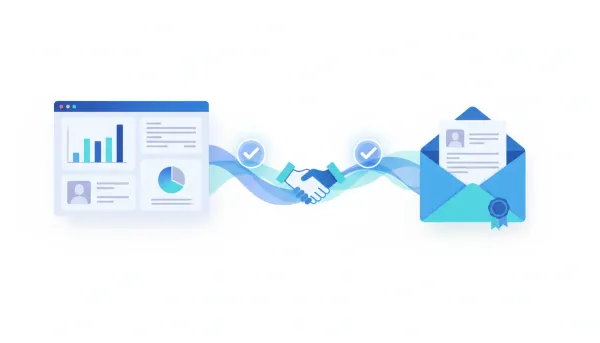
Close Deals Faster and Resolve Support Faster with Visual AI Bots

Visual AI bots transform conversations by letting your business interpret and act on images and voice notes automatically. Instead of asking customers to explain a screenshot or type details, your bot can read a receipt, identify a product photo, suggest appointments after seeing a calendar screenshot, and route requests to the right team — all in seconds. This saves time, cuts back-and-forth messages, and increases first-contact resolution.
Why visual understanding matters for busy teams
- Faster resolution — Customers send a photo and the bot immediately analyzes it instead of waiting for a human review.
- Higher conversion — Visual context helps sales bots recommend relevant listings, products, or services faster.
- Less manual work — Extracted details like order numbers or addresses populate fields automatically and trigger workflows.
- Consistent first replies — Bots follow guardrails for on-brand responses and hand off to humans only when needed.
- Cross-channel reach — Works across chat widgets, social DMs, SMS, WhatsApp, and more so customers get the same experience wherever they message.
Core capabilities of visual AI bots
- Image recognition — Identify objects, locations, and text inside photos.
- OCR (text extraction) — Read receipt totals, order numbers, IDs, and other printed text.
- Context-aware replies — Use image content plus previous chat to craft accurate responses.
- Multimodal handling — Accept multiple images, text, and voice notes in one conversation and synthesize a single reply.
- Automatic routing — Map extracted details to custom fields and push leads into the right pipeline or team queue.
How to enable image and audio understanding in your conversation bot
- Open the settings for the specific AI agent or conversation bot you use inside the platform.
- Locate the option that allows the bot to react to images and audio messages and toggle it on.
- Set an idle timeout so the bot goes to sleep after a configured period of inactivity. This avoids consuming resources on abandoned chats.
- Configure the response wait time. Give the bot 30–90 seconds to gather and analyze multiple files before composing a reply so it can account for several images or voice notes sent at once.
- Save your settings and test the bot on your main channels.
Supported image formats typically include JPEG, PNG, and HEIC. Delivery limits and file-size caps depend on the channel and the carrier, so test each channel before relying on high-resolution photos for critical workflows.
Channels that commonly support visual messages
- Chat widget on your website
- Social direct messages (for example, Instagram and Facebook DMs)
- SMS and MMS
- Live chat and WhatsApp
Real-world use cases that save time and increase sales
Visual AI bots are useful across functions. Here are the most practical scenarios for small teams and agencies that want quick wins.
Support ticket triage
- Customer sends a screenshot of an error message or a damaged product photo.
- Bot reads the screenshot, extracts error codes or visible defects, and provides immediate troubleshooting steps.
- If the image shows a problem the bot cannot fix, it tags the ticket with the extracted details and routes it to the technician who needs that context.
Product troubleshooting and returns
- Identify which model or SKU the customer has from the photo so the correct return label and instructions are sent.
- Extract serial numbers or part numbers from images to validate warranty status automatically.
Sales and appointment qualification
- Prospects send images of spaces or examples they like. The bot detects the type of property or product and suggests similar options in the relevant area or price range.
- When calendar screenshots are shared, the bot can confirm availability or post a calendar link if trained to do so.
Receipts, invoices, and quick data capture
- Extract totals, dates, and vendor names from receipts to create expense records or validate purchases for refund requests.
- Use extracted data to trigger verification workflows or to prefill claim forms.
Document validation and pre-checks
- Quickly read IDs, licenses, or certificates to confirm whether documents meet format expectations before a human reviews them.
- Flag blurry or incomplete uploads and ask the user for a better photo with clear instructions.
Design prompts and guardrails for reliable answers
A bot’s accuracy depends on clear instructions and examples. Use prompt engineering in simple, structured ways:
- Be explicit about allowed actions — For instance, instruct the bot to only post a calendar link and not to try booking if you want humans to confirm appointments.
- Provide examples — Include positive and negative examples so the bot learns when to take action and when to escalate.
- Use fallback logic — When image quality is poor, the bot should ask for a higher-resolution photo or a different angle rather than guessing.
- Limit creative output — For factual tasks such as reading order numbers, tell the bot to always quote the exact extracted text and avoid paraphrasing.
- Build a handoff strategy — Define thresholds for certainty where the bot will create a ticket and notify a human agent instead of responding directly.
Routing, data mapping, and workflow automation
Extracted image data should feed downstream automations to maximize value. Typical mappings include:
- Order number from a receipt to Order ID custom field
- Address detected on a photo to Shipping Address field
- Property type from a listing photo to Lead Qualification status
- Detected warranty dates to Service Eligibility flags
When a field is populated, trigger these common workflows:
- Automatically create a support ticket with attachments and prefilled notes
- Push a qualified lead into the correct sales pipeline and book a follow-up task for an agent
- Send confirmation messages with next steps and relevant links
- Escalate high-priority issues to a human agent with the image and OCR output attached
Privacy, compliance, and message costs
Processing images raises two operational considerations: data privacy and usage costs.
- Privacy and consent — Make it clear in your messaging and privacy notices how images are used and retained. Limit storage duration for sensitive documents and mask or redact personal data when possible.
- Data retention — Keep extracted text and images only as long as necessary for the business process and delete or archive them according to your policy.
- Message and media fees — Channel fees and AI processing usage may apply. Track how many images or long audio files are processed to understand monthly costs.
- File-size and channel limits — Different channels impose different maximum attachment sizes and delivery constraints; optimize workflows for typical mobile uploads rather than assuming desktop-quality files.
Tips to reduce hallucinations and improve accuracy
- Keep replies factual — When extracting text, instruct the bot to echo exact matches rather than infer missing details.
- Provide contextual examples — Train the bot with a set of labeled images and their correct interpretations to reduce mistakes in common scenarios.
- Limit the bot’s scope — Narrow tasks to specific domains such as "identify order number" or "find license plate" so it does not attempt unrelated inferences.
- Use threshold-based handoffs — If confidence is low, have the bot escalate to a human instead of guessing.
- Test across channels — Verify performance on SMS, WhatsApp, and social DMs because compression and formatting can change the input the bot sees.
Troubleshooting common issues
Bot does not respond to images
- Confirm that image and audio handling is enabled in agent settings.
- Check the response wait time; if too short, the bot may reply before files finish uploading.
- Verify channel support and file-type restrictions.
Extracted text is incorrect
- Ask for a clearer photo and provide a short example image showing acceptable quality.
- Improve OCR accuracy by training the workflow to expect specific formats like receipts or IDs.
- Implement a confirmation step where the bot repeats the extracted data and asks the user to confirm it.
Multiple images and voice notes sent at once
- Increase the bot’s response wait time so it can process all attachments.
- Design the reply to acknowledge multiple items and summarize findings rather than trying to handle everything at once.
- If necessary, break processing into steps: analyze images first, extract fields second, then follow up with actions.
Implementation checklist
- Enable image and audio handling in the agent settings
- Set idle timeout and response wait time appropriate to your typical conversation flow
- Define clear prompts and guardrails for what the bot can and cannot do
- Map extracted fields into your CRM or custom fields
- Create workflows that trigger on extracted data and route to the correct pipeline or team
- Test across every supported channel to validate delivery and image quality
- Publish a short guide for customers that explains acceptable photo quality and examples
- Monitor usage and costs associated with media processing and AI queries
"Implementing visual bot responses cut our average ticket resolution time in half and made follow-ups far more accurate."
FAQ
Which file types are supported for image analysis?
Commonly supported formats are JPEG, PNG, and HEIC. Exact support depends on the channel; test each channel to confirm file handling and size limits.
Which channels can handle image-based bot interactions?
Most chat widgets, web live chat, social direct messages, SMS/MMS, and messaging apps like WhatsApp support images. Channel limitations and compression vary, so validate on the channels your customers use most.
How long should the bot wait before replying when a customer sends multiple images?
Set the response wait time to 30–90 seconds depending on how many files customers usually send. This gives the bot time to analyze all attachments and craft a consolidated reply.
What should we do if the image is blurry or unreadable?
Use fallback logic: ask the user for a clearer photo, provide tips for taking a good picture, and offer alternatives such as typing key details. Do not guess from low-confidence OCR results; escalate when necessary.
Can extracted image data automatically update contact or lead records?
Yes. Map extracted fields like order numbers, addresses, or property types into custom fields so workflows can trigger automatically and agents receive prefilled context.
How do we prevent the bot from giving financial or legal advice?
Add guardrails that restrict the bot from offering regulated advice and instruct it to route such requests to a qualified human who can provide proper guidance.
Will processing images increase our costs?
Image processing and AI usage can add incremental costs, and some channels charge per media message. Monitor usage and set limits for test runs before scaling to control expenses.
How can we keep customers’ documents secure?
Limit retention, encrypt stored files, display clear consent notices, and redact sensitive elements when possible. Follow your internal privacy policies and legal requirements for handling personal data.
When should the bot hand off to a human?
Hand off when confidence is low, when a request requires judgment or approvals, or when the user asks to speak to a person. Use threshold-based rules so escalation occurs automatically when needed.
What are simple first steps to test visual AI capabilities?
Enable images and audio in a test agent, set a longer response wait time, prepare a few sample images (receipts, product shots, a calendar screenshot), and run test conversations across your main channels to evaluate accuracy and delivery.
Final notes
Visual AI bots are a practical way to speed up support, qualify leads, and automate routine tasks that previously required human review. By enabling image and audio understanding, designing clear guardrails, and mapping extracted data into workflows, teams can reduce friction and focus on higher-value work. Start small with a couple of use cases, measure the impact on resolution time and conversion, and expand once you see consistent gains.
We recommend testing with real inbound messages and tracking both accuracy and costs. When you tune prompts, set sensible handoff rules, and educate customers on how to submit clear photos, visual bots will free your team from repetitive tasks and let you close deals and resolve issues far faster.