
How to Build a Sustainable HighLevel Affiliate Business: Step-by-Step Guide for Agencies and Creators
Learn how to build a sustainable HighLevel affiliate business by combining agency services with SaaS rewards. This guide covers recurring revenue strategies, content creation, and retention playbooks to help agencies and creators scale predictable monthly income.

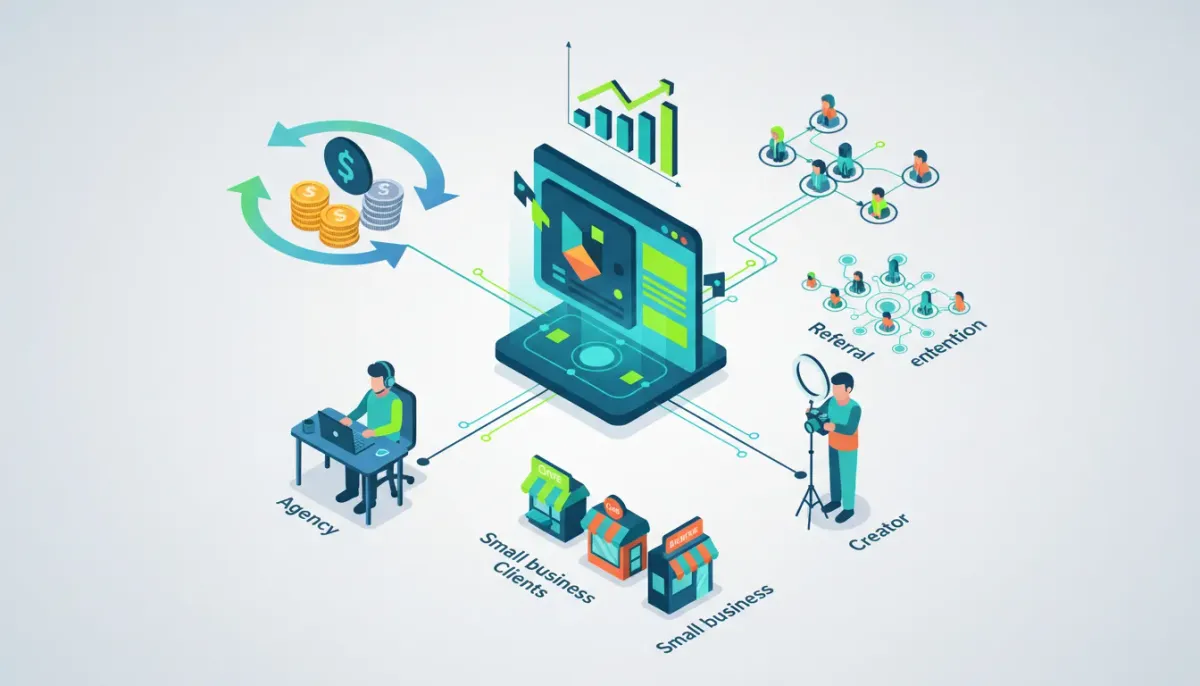
HighLevel (GoHighLevel, GHL) affiliates earn recurring income by promoting a platform that agencies use to run marketing automation, CRMs, and client workflows. This guide explains a practical path to a repeatable affiliate business you can scale: start with agency services, convert clients to SaaS subscriptions on HighLevel, use content to attract prospects, and build a community that retains and refers customers.
Start Your HighLevel Trial + Get Instant Nexus Hub Access
Build, scale, and optimize your business with HighLevel. Start a free trial using this link to get automatic access to the Nexus Hub community, templates, and implementation resources.
Start Free TrialWho this guide is for
- Agency owners who want an additional recurring revenue stream
- Content creators or marketers aiming to promote HighLevel sustainably
- Anyone evaluating how affiliate marketing and SaaS-driven retention can combine to create predictable income
Why HighLevel affiliate income is different from one-off affiliate programs
Most affiliate programs pay a single commission. HighLevel’s affiliate model rewards recurring signups tied to a platform used to run client campaigns, automations, and SaaS offers. That means what matters most is retention. If referred customers stay and use the product, your commissions compound over time; if they churn, the upside disappears.
Core principles to adopt before you start
- Solve a real client problem — don’t sell the tool; sell the outcome (more leads, faster follow-up, recurring revenue).
- Keep the initial offer simple — surface one high-value feature first (example: automated SMS follow-ups for leads).
- Build systems that keep clients paying — billing, onboarding, and templates that minimize churn are the difference between one-time commissions and long-term income.
- Be consistent — predictable publishing and outreach beats sporadic bursts.
Step 1 — Validate a simple agency-to-SaaS workflow
Before trying to attract affiliates or large audiences, create a repeatable client workflow that demonstrates value and generates recurring revenue you can scale.
- Pick a high-impact feature to deliver quickly (example: an auto text-back workflow that responds to ad leads).
- Deliver results using HighLevel: landing page, lead capture, CRM integration, and a follow-up workflow.
- Convert clients to a small monthly SaaS subscription for continuity (a common approach is retaining clients on a $200–$400/month plan during off-season or quieter months).
- Measure outcomes: leads generated, appointment rate, and client churn.
Step 2 — Create content that solves pain, not just demos
One-to-one conversations teach you the language and pain points of your target market. Use that insight to create content that explains the problem and a clear, actionable solution using HighLevel.
- Content pillars: agency growth tactics, implementation walkthroughs, case studies, and SaaS conversion strategies.
- Formats that scale: long-form tutorials, short tips, and re-purposed recorded coaching sessions (Loom-style answers make excellent videos).
- Schedule: aim for a minimum cadence you can sustain — for many creators that is 1–3 videos/posts per week. Consistency matters more than perfection.
Example YouTube content plan (first 90 days)
- Weeks 1–4: Publish 1 how-to or case-study video per week. Topics: "Set up automated SMS responses," "SaaS-conversion for seasonal clients."
- Weeks 5–8: Add two short-form clips per week from longer videos; test thumbnails and hooks.
- Weeks 9–12: Produce a 3-video mini-series on "How to keep clients paying using HighLevel workflows."
Step 3 — Turn one-to-one success into one-to-many
Personal consultations are valuable for early feedback and for learning common issues. Convert those insights into scalable assets:
- Record answers to recurring questions and publish them publicly.
- Create a private group or community where paying recruits can get coaching. This becomes a funnel for more signups and increases retention.
- Turn top students into paid coaches to scale support without hiring JR staff externally.
Retention-first affiliate playbook
Your affiliate revenue depends on customers staying. Build a retention playbook you and your referrals can use:
- Onboard fast: First 7 days must deliver a visible improvement (live call, first campaign live, automations enabled).
- Template libraries: Provide niche-specific funnels, email sequences, and workflows so users get value without starting from scratch.
- Regular check-ins: Weekly to monthly performance reviews automated via HighLevel campaigns.
- Low-touch operations: Outsource repetitive support tasks so clients get constant service for less cost.
Hiring and team strategy
Scale smart: hire for operations and to protect your time. Two hiring approaches work well for affiliates running communities and agency bundles:
- Coaches from top students: Pay your most successful members to coach others. They already understand the system and speak the language of your audience.
- Operations hires: Virtual assistants for billing, onboarding, and support. Hire slowly and document processes in a knowledge base or templates inside HighLevel.
Practical frameworks and templates
Below are concise, repeatable templates you can use immediately.
1. Simple SaaS conversion pitch (for existing clients)
“We already built your funnel and automations. To keep everything running while you’re not actively advertising, we’ll move you to a maintenance plan for $X/month so you keep receiving leads and appointments without the up-front ad spend. You can pause or scale anytime.”
2. One-week onboarding checklist
- Day 1: Connect domain, import contacts, and run test lead through workflow.
- Day 2: Enable two automations (auto SMS follow-up and appointment reminder).
- Day 3: Launch landing page and 1 live campaign.
- Day 4–7: Review results, tweak message, and record a short training video for the client.
3. 30/60/90 content goals for affiliates
- 30 days: Publish 8–12 pieces (long-form or short) and get first affiliate signups.
- 60 days: Convert system into a paid community or course; automate onboarding for at least 3 clients.
- 90 days: Hire a coach from your top students, document templates, and aim for steady MRR growth.
Key metrics to track
- MRR (monthly recurring revenue): core measurement of your affiliate earnings from month to month.
- Churn rate: percentage of customers cancelling; lower churn = higher lifetime commissions.
- Conversion rate: leads to paid clients for your agency offers and for affiliate referrals.
- Average client lifetime value (LTV): helps decide how much to invest in paid acquisition.
Common mistakes and how to avoid them
- Waiting too long to commit to content: Early hesitation slows learning. Start with imperfect content and iterate.
- Quitting after low initial traction: Consistency beats bursts. Set small, measurable goals like "first affiliate in 30 days."
- Overcomplicating trust signals: People want clear solutions and social proof; explain the result and show client wins rather than overproducing slick demos.
- Ignoring retention: Many affiliates focus on signups but neglect onboarding and templates—build both.
- Not running an agency: While not mandatory, agency experience provides repeatable case studies, client stories, and ideas for content that educates instead of just selling.
How AI fits into your affiliate and agency playbook
AI is a tool that helps with drafting copy, testing hooks, and automating repetitive tasks. Use AI for:
Start Your HighLevel Trial + Get Instant Nexus Hub Access
Build, scale, and optimize your business with HighLevel. Start a free trial using this link to get automatic access to the Nexus Hub community, templates, and implementation resources.
Start Free Trial- Generating headline and thumbnail variations for content testing
- Drafting email and SMS templates you can refine
- Speeding up creation of standard operating procedures
But AI cannot replace first-hand agency experience or authentic storytelling. Use it to increase output, not to replace the human connection your content and coaching deliver.
Scaling from part-time to full-time affiliate
Once you have a validated funnel and retention playbook, scale with predictable levers:
- Increase content volume and repurpose: Turn one long video into multiple short clips, blogs, and posts.
- Paid media: Test small ad budgets to amplify best-performing content or lead magnets.
- Partnerships: Cross-promote with complementary creators or agencies.
- Systematize onboarding: Document your exact client setup so new coaches and hires can replicate success.
Checklist before promoting HighLevel as an affiliate
- Have one validated client case study demonstrating measurable improvement.
- Built at least two reusable HighLevel templates (funnel + workflow).
- Recorded at least 8 pieces of content that answer common questions.
- Created a retention onboarding runbook for new customers.
- Set realistic affiliate goals: first month = 1 affiliate, three months = steady MRR target.
Next steps and resources
If you want to try HighLevel hands-on, start with a free trial to build and test the workflows and automations described above. For implementation support, Nexus Hub and other community template libraries offer prebuilt funnels and playbooks you can adapt to your niche.
Conclusion — a realistic path to recurring affiliate revenue
A sustainable HighLevel affiliate business combines agency know-how, productized SaaS offers, consistent content that teaches instead of sells, and a retention playbook that keeps customers paying. Focus on solving a specific client problem, document the workflow, publish consistently, and scale by turning one-to-one teaching into one-to-many content and coaching. Small, repeatable wins compound into predictable monthly income.
Frequently asked questions
How quickly can I earn my first affiliate commission with HighLevel?
Times vary. With focused content and a clear offer, many creators get their first signup within 30–90 days. Setting achievable goals like "one affiliate in 30 days" helps maintain momentum and test messaging.
Do I need to run an agency to succeed as a HighLevel affiliate?
No, but agency experience accelerates success. Running campaigns for clients creates case studies, provides content ideas, and helps you understand retention—three things that improve affiliate conversions.
What HighLevel features should affiliates highlight first?
Lead follow-up automations (SMS and email), appointment booking, CRM workflows, and funnel templates. Showcase features that deliver immediate business outcomes—more leads, higher appointment show rates, and faster response times.
How do I reduce churn for referred customers?
Onboard quickly, provide niche-specific templates, schedule regular performance reviews, and automate recurring value checks. Hiring or training coaches from top students helps maintain support quality while scaling.
Is AI a threat to affiliate content creation?
AI can speed up production and improve drafts, but it does not replace authentic storytelling, real agency experience, or the trust built through consistent human interaction. Use AI to augment, not replace, your work.
Start Your HighLevel Trial + Get Instant Nexus Hub Access
Build, scale, and optimize your business with HighLevel. Start a free trial using this link to get automatic access to the Nexus Hub community, templates, and implementation resources.
Start Free Trial