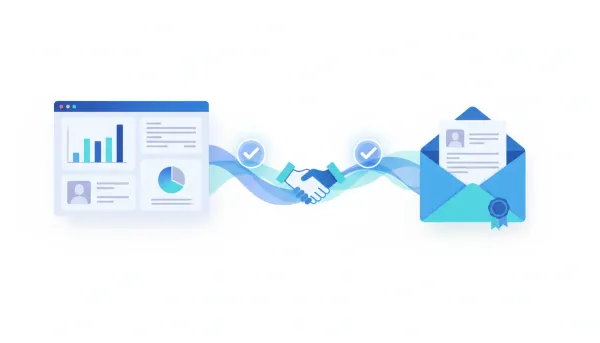
How to Use the Template Library for Branded Email Review Requests

Photo by Yogas Design on Unsplash
Branded review requests are an easy, high-impact way to turn satisfied customers into public advocates. We used the template library inside our business software to transform plain, generic review emails into consistent, on-brand messages that feel personal and professional. The result: higher open rates, clearer messaging, and a smoother process for follow-ups.
Why branded review emails matter for growing businesses
Reviews drive trust. When a potential customer sees feedback that looks like it came from a professional, consistent source, they engage more readily. Branded review requests help us:
- Reinforce our identity by including logos, colors, and tone in every message.
- Reduce confusion by making it clear the request comes from our team, not an unknown system address.
- Improve response rates because personalized and branded messaging feels more legitimate.
- Maintain consistency as the business scales or when new team members begin sending requests.
Quick overview of the workflow
The process is straightforward and fits into daily operations without adding complexity. We broke it into four steps:
- Enable the email request feature in the settings.
- Create or import a template from the template library.
- Customize branding and messaging in the email builder.
- Map templates to initial requests and retry sequences, then save and send.
Step-by-step: Set up branded email review requests
1. Enable email requests
Start in the reputation or settings area of your business software. Locate the option for email requests and switch it on. This turns on the capability to send review prompts by email and unlocks template selection.
Why this matters: enabling the feature is the gateway to everything else. It ensures your follow-ups and retry logic will run from a known place inside your system and not rely on manual sending.
2. Create or import templates from the library
Once email requests are enabled, you can either create a template from scratch or import one from the template library. The library offers dozens—often hundreds—of ready-made templates organized by category, such as creative, professional, or concise.
- Create from scratch when you want total control over wording and layout.
- Import from the library when you want a professionally designed starting point that saves time.
The import flow is fast: browse categories, preview templates, and select one to add. The template appears in the editor within seconds so you can begin customizing right away.
3. Customize the template in the email builder
Customizing is where branded requests become effective. We focus on three elements:
- Visual identity: add or update the logo and check colors match your brand.
- Voice: adjust the wording so it sounds like your team—not a generic system.
- Action: include a clear review link and call to action so customers know exactly what to do.
A few practical tips:
- Keep subject lines short and benefit-driven. For example: "Share feedback on your recent visit" instead of "Review Request."
- Use the customer’s name in the first line to increase relevance and open rates.
- Place the review link prominently and label it clearly, like "Leave a review." Avoid burying it in paragraphs.
- Check mobile layout. Many customers view emails on phones, so buttons and links should be large enough to tap.
4. Map templates to initial and retry messages
One of the most useful capabilities is mapping different templates to each stage of your review request sequence. For example:
- First request: a warm, concise ask with the review link and a thank-you note.
- Retry 1: a brief reminder that references the earlier email and emphasizes how much a review helps.
- Retry 2: a final friendly nudge or an alternative way to leave feedback.
This layered approach increases chances of getting a response without sounding pushy. Once you select templates for each stage, save the mapping. The system will then use these templates automatically when sending follow-ups.
Testing and best practices
Before you roll templates out broadly, do a simple test. Send the email to a colleague or to yourself. Look for:
- Brand alignment: logo, colors, and tone are consistent.
- Clickable review link: it goes to the right destination and opens correctly on mobile.
- Personalization tokens: the customer name and appointment details populate as expected.
Additional best practices we use:
- Timing matters. Send the initial request while the experience is fresh—usually within 24 to 72 hours after service or delivery.
- Keep it short. Customers respond more often to concise messages with a clear single ask.
- Vary retries. Change the tone or offer different value in reminders so repeat messages feel helpful rather than repetitive.
- Standardize templates. Document a default template set so any team member can trigger requests with confidence.
Practical examples we used
Here are two simple templates we adapted from the library and how we tailored them:
- Concise Request
- Subject: Thanks for your business — quick favor?
- Body: Personalized greeting, one sentence about the recent service, clear button to leave a review, thank-you sign-off.
- Why it worked: Short, respectful, and low friction. High click-to-open rate.
- Story-based Ask
- Subject: How did we do during your visit?
- Body: Brief customer anecdote or highlight, followed by the review link and a line about how reviews help others choose us.
- Why it worked: Builds emotional context and explains the impact of taking two minutes to leave feedback.
Checklist before you press save
Use this quick checklist to make sure each template is ready to go:
- Logo and brand colors are correct.
- Subject line is concise and relevant.
- Personalization tokens are tested and working.
- Review link is visible and mobile-friendly.
- Retry templates are mapped and saved.
- One final test email has been sent and reviewed.
Common pitfalls and how we avoid them
We learned a few lessons through trial and error:
- Overly formal language can feel robotic. We prefer friendly and straightforward phrasing to match our brand voice.
- Too many retries leads to annoyance. Limit reminders to two or three with increasing brevity.
- Broken personalization happens when tokens don’t populate. Always run a test and check the preview mode.
- Ignoring mobile layout reduces conversion. Preview on a phone and use a single clear CTA button.
Using the template library streamlined our review pipeline. We spent minutes customizing templates that now run automatically and look like they come directly from our team.
How this integrates with day-to-day operations
The setup keeps things simple for everyone on the team. Once the templates are in place:
- Front-desk or service staff don’t need to write review emails manually.
- New hires follow the same messaging without extra training.
- Reporting becomes cleaner because all review requests use consistent templates and tracking.
Pricing and offering clarity (what to expect)
In our experience, the process of creating and using branded templates does not add hidden costs. The effort is mainly upfront time to customize and test. After that, requests run as part of the software’s existing functionality without extra per-email fees in most plans.
What matters is predictable pricing and a simple setup. When evaluating a solution, look for:
- Clear subscription tiers with transparent features.
- No unexpected charges for sending follow-ups.
- Support resources or help documentation to get started quickly.
Real-world impact
For our business, the benefits were straightforward and measurable in day-to-day operations:
- Faster onboarding for team members responsible for reputation management.
- More consistent brand presentation in customer communications.
- Noticeable uptick in review responses from a small increase in open and click rates.
FAQ
How do I enable email review requests?
Enable the email requests option in your reputation or settings area within the business software. This toggles the feature on and makes templates available for selection and mapping.
Can I use pre-designed templates?
Yes. The template library contains many pre-designed options organized by style. You can import one and then customize the logo, wording, and call to action before saving.
How do retry templates work?
Retry templates are additional messages mapped to later stages of the follow-up sequence. You select a template for the initial request and assign others to subsequent retries so the system sends them automatically if a customer does not respond.
What should I test before sending to customers?
Send a test email to yourself or a colleague. Verify brand elements, personalization tokens, review link functionality, and mobile layout. Adjust any broken tokens or layout issues before going live.
Will these emails look like they come from our brand?
Yes. By adding your logo, matching colors, and tailoring the voice, the messages will read as if they come directly from your team rather than a generic system address.
How many retry attempts should we use?
Limit retries to two or three. Keep reminders shorter and more urgent with each attempt. Too many follow-ups can feel intrusive and reduce goodwill.
Final thoughts and next steps
Branded review requests are a low-effort, high-value part of reputation management. We built a simple, repeatable system by enabling the email feature, selecting templates from the library, customizing for brand consistency, and mapping retry messages thoughtfully. The investment in setup time pays back quickly through better response rates and less manual work.
If you haven’t already, enable email requests in your business software and create one branded template today. Test it, map retries, and standardize the sequence so everyone on the team can rely on consistent, professional review outreach.