AI Coaching for Agencies: How to Build, Scale, and Measure AI Coaching with HighLevel
Learn how to build, scale, and measure AI coaching for your agency using HighLevel. This guide covers a practical framework for automating client onboarding, improving performance, and creating new revenue streams through structured AI playbooks and automated workflows.

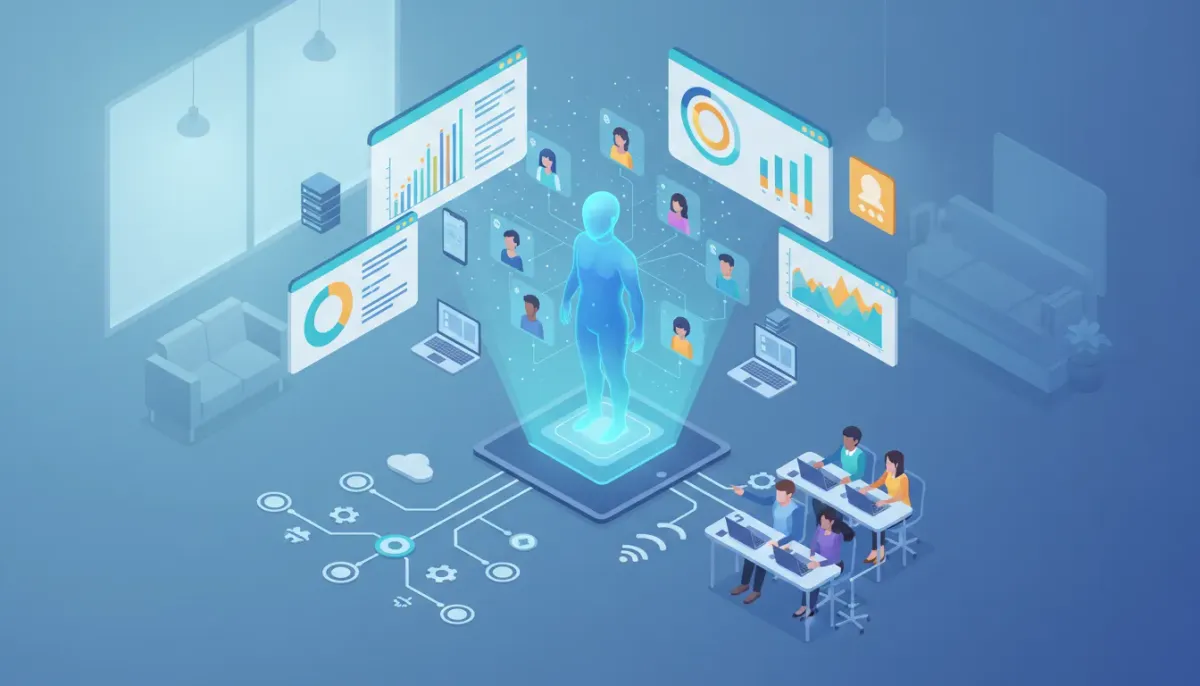
AI coaching uses artificial intelligence to deliver personalized coaching, guidance, and decision support at scale. For agencies, SaaS operators, and client-facing teams, AI coaching can automate onboarding, improve client outcomes, reduce support load, and create new recurring revenue opportunities. This guide explains what AI coaching is, why it matters for agencies, and gives a practical, step-by-step framework to implement and scale AI coaching using HighLevel (GoHighLevel) tools, workflows, and best practices.
Start Your HighLevel Trial + Get Instant Nexus Hub Access
Build, scale, and optimize your business with HighLevel. Start a free trial using this link to get automatic access to the Nexus Hub community, templates, and implementation resources.
Start Free TrialWhat is AI coaching and who should use it?
AI coaching is a system that combines conversational AI, knowledge bases, and automation to provide tailored advice, training, and nudges. It is different from a simple FAQ chatbot because it is designed to coach toward outcomes: help a client set up a funnel, improve ad performance, or train a salesperson on objection handling.
This approach is ideal for:
- Digital marketing agencies that want to scale client onboarding and strategy guidance.
- Customer success teams that need consistent, proactive coaching for users.
- Agencies building new AI-driven services or packaged coaching products.
- SaaS operators looking to reduce repetitive support while increasing value delivery.
Why adopt AI coaching now?
AI coaching delivers measurable advantages:
- Scale — deliver 1:1-like guidance to many clients without proportional headcount increases.
- Consistency — enforce best practices and standardized onboarding steps across accounts.
- Speed — reduce time-to-first-value for new clients through automated checklists and targeted advice.
- Revenue — upsell coaching tiers or managed services with AI-enabled playbooks.
- Efficiency — reduce support tickets and manual coaching tasks by automating routine guidance.
AI Coaching Implementation Framework (Plan, Build, Measure, Scale)
Use this practical framework to design and launch AI coaching in your agency or product.
1. Plan: Define outcomes and scope
- Define specific coaching outcomes. Example outcomes: "Get first client in 30 days," "Improve ad CPA by 20%," "Complete funnel setup in 48 hours."
- Map target personas. Are you coaching SMB owners, marketing managers, or internal sales reps? Different personas need different tone and depth.
- Choose initial use cases. Start with 1–3 high-impact flows such as onboarding, weekly performance review, and sales objection handling.
- Identify data sources. CRM fields, campaign metrics, form responses, and knowledge base articles that the AI will reference.
2. Build: Create knowledge, prompts, playbooks, and workflows
This is where HighLevel becomes central. HighLevel provides CRM, workflows, automations, and a place to host playbooks and AI agents that can be wired together.
- Assemble a knowledge base. Collect onboarding docs, SOPs, FAQs, and client-specific notes. Structure content so the AI can reference exact steps and examples.
- Design coaching personas and prompts. Write distinct personas (tone, authority level, constraints) and guardrails so the AI behaves predictably.
- Create playbooks in HighLevel. Translate coaching flows into HighLevel playbooks: tasks, messages, surveys, conditional logic, and escalation points.
- Build workflows and automations. Use HighLevel workflows to trigger coaching at key events: form submission, onboarding start, campaign underperformance, or renewal touchpoints.
- Integrate data channels. Connect ad accounts, analytics, and custom fields so coaching recommendations use real account data rather than generic advice.
- Define human-in-loop handoffs. Create triggers and tasks that send complex or low-confidence cases to a human coach or account manager.
Example HighLevel building blocks to use:
- Workflows and triggers for automated coaching sequences.
- Campaigns and sequences to deliver coaching messages via SMS, email, and inbox.
- Surveys and forms to capture client inputs and measure readiness.
- Tags and custom fields for segmentation and personalization.
- Tasks and opportunities for human follow-up.
3. Test: Validate prompts, flows, and handoffs
- Run internal pilots. Test with staff accounts to validate accuracy and conversational tone.
- Measure confidence and error rates. Track how often the AI suggests actions that require edits or human corrections.
- Adjust prompts and knowledge base continuously. Prompt engineering is iterative. Version control prompts and update content based on mistakes and new best practices.
- Simulate edge cases. Create tests for ambiguous inputs, rare client types, and missing data scenarios to ensure safe fallbacks.
4. Scale: Operation, monitoring, and packaging
- Standardize core playbooks. Turn validated coaching flows into reusable templates that can be cloned per client.
- Build dashboards. Report on adoption, time saved, ticket reduction, and outcome metrics using HighLevel reporting or BI tools.
- Train staff on oversight. Define SLAs for human review, escalation rules, and when to override AI outputs.
- Package services. Offer tiered plans: self-serve AI coaching, AI + human oversight, and fully managed coaching.
Prompt and persona examples
Use structured prompt templates so the AI consistently follows your coaching method. Below is a simple, reusable prompt pattern that works across many use cases.
You are a concise coaching assistant for [Persona]. Follow these rules:
1) Ask one clarifying question if input is unclear.
2) Provide a 3-step action plan with estimated time and required assets.
3) Cite source from the knowledge base when possible.
4) If confidence is below 70%, recommend human review.
Client context: [Insert CRM field: business model, goal, recent metrics]
Deliver the plan in plain language with next actions.
Replace bracketed fields with dynamic merges from HighLevel custom fields so the AI always sees relevant client context.
Common agency use cases and example workflows
Client onboarding coach
- Trigger: Client signs contract or submits onboarding form.
- Flow: AI delivers a tailored onboarding checklist, schedules first tasks, and answers setup questions via inbox.
- Human handoff: If client indicates complex tech stack or requests custom work, create a task for the onboarding manager.
Weekly performance coach
- Trigger: Weekly ad performance snapshot or campaign drop below threshold.
- Flow: AI analyzes metrics, provides a 3-point optimization plan, and creates recommendations in CRM notes for the manager.
- Value: Faster troubleshooting and proactive account improvements.
Sales and objection coaching for reps
- Trigger: New lead type or salesperson requests help via internal chat.
- Flow: AI provides tailored rebuttals and step-by-step negotiation scripts based on funnel stage and client persona.
- Integration: Use HighLevel tasks to track usage and coach adoption per rep.
Measuring success: KPIs and dashboards
Focus on outcome-driven KPIs rather than vanity metrics. Track these to prove ROI:
- Time-to-first-value — average days from signup to core milestone completion.
- Activation rate — percent of clients completing onboarding tasks within target time.
- Client retention and churn — compare cohorts with and without AI coaching.
- Support ticket volume — reduction in repetitive questions.
- Upsell/conversion — additional revenue tied to coaching packages.
- AI confidence and handoff rate — percent of AI responses requiring human intervention.
- Client satisfaction — NPS, CSAT after coaching interactions.
Create a small dashboard in HighLevel or a BI tool that combines these metrics and tracks trends across clients and playbooks.
Start Your HighLevel Trial + Get Instant Nexus Hub Access
Build, scale, and optimize your business with HighLevel. Start a free trial using this link to get automatic access to the Nexus Hub community, templates, and implementation resources.
Start Free TrialPitfalls, mistakes, and things to watch out for
- Over-automation. Not every interaction should be automated. Preserve human touch for high-value or sensitive cases.
- Insufficient context. AI advice without accurate data can be misleading. Ensure CRM fields and metrics are up-to-date.
- Hallucinations and inaccurate recommendations. Implement confidence scoring and always provide a clear path to human review.
- Poor prompt design. Vague prompts produce inconsistent results. Use structured templates with clear constraints.
- Privacy and compliance. Be mindful of client data policies. Limit what the AI can access and store sensitive information appropriately.
- Neglecting measurement. Without KPIs, you cannot prove ROI. Track outcome metrics from day one.
- Version control. As playbooks evolve, maintain versions so past recommendations remain reproducible.
Scaling best practices
- Start small and iterate. Pilot with a subset of clients, learn quickly, then expand playbooks.
- Package templates. Convert successful playbooks into templates for reuse across accounts and to sell as products.
- Train staff. Teach account managers how to interpret AI suggestions and override when necessary.
- Monitor model drift. Periodically reassess prompt effectiveness and update knowledge bases for new industry trends.
- Community and templates. Leverage communities (for example, Nexus Hub) for templates, proven playbooks, and implementation support.
Practical checklist to launch an AI coaching pilot in HighLevel
- Define 1 primary coaching outcome and 1 persona.
- Collect and structure 10–20 knowledge base articles or SOPs.
- Create a 3-step coaching prompt template and persona definition.
- Build one HighLevel workflow with triggers, messages, and a human handoff rule.
- Run internal tests and fix prompt edge cases.
- Roll to 10–20 pilot clients and measure the KPIs listed above for 30–90 days.
- Iterate, document versions, and convert into a template for scaling.
How accurate is AI coaching and do I need human oversight?
AI coaching accuracy depends on prompt quality and data completeness. AI is excellent for routine guidance and standard playbooks but should include human-in-loop oversight for complex or mission-critical decisions. Track AI confidence and route low-confidence items to human coaches.
Can AI coaching replace account managers?
AI coaching augments account managers by automating repetitive tasks and delivering consistent guidance. It can reduce workload and allow account managers to focus on strategic, high-value interactions. Full replacement is not recommended for most agencies.
What HighLevel features are most useful for AI coaching?
HighLevel workflows, playbooks, sequences, forms, custom fields, tags, and the inbox are core to AI coaching. Use workflows to trigger coaching, playbooks to standardize actions, and CRM fields to provide context to the AI.
How do I handle privacy and client data?
Limit data passed to the AI to what is necessary, anonymize where possible, and follow contractual and regulatory obligations. Keep a clear policy for data retention and ensure secure storage of knowledge artifacts.
How do I measure ROI on AI coaching?
Compare cohorts with and without AI coaching using metrics like activation time, retention, support ticket reduction, and revenue uplift from upsells. Track cost savings from reduced manual labor against any platform and model costs.
Next steps and practical resources
To begin, choose one high-impact coaching flow and follow the checklist above. If you use HighLevel, build the playbook in the platform using workflows and CRM merges to feed the AI. As you validate results, package playbooks into templates for faster onboarding and to create new service tiers.
Consider starting a HighLevel free trial to experiment with workflows and playbooks and to test how AI coaching integrates into your agency systems. For ready-made templates and community support, explore community hubs like Nexus Hub where agencies share playbooks, automations, and implementation tips.
Summary
AI coaching is a practical, high-value addition for agencies and SaaS teams that want to scale guidance, reduce repetitive work, and deliver consistent outcomes. Use a phased framework that defines outcomes, builds knowledge-driven playbooks within HighLevel, tests carefully, and measures impact with clear KPIs. Prioritize human oversight, control scope to prevent hallucinations, and package proven playbooks to create new productized services.
With careful planning and continual iteration, AI coaching becomes a force multiplier: better client outcomes, higher retention, and more predictable agency operations.
Start Your HighLevel Trial + Get Instant Nexus Hub Access
Build, scale, and optimize your business with HighLevel. Start a free trial using this link to get automatic access to the Nexus Hub community, templates, and implementation resources.
Start Free Trial